

If you just finished your last meeting, you probably have a transcript of it already somewhere, taken for you, that you can revisit at any point. Hard to imagine we ever lived without quick access to everything discussed on that call on Thursday afternoon, 25th of November. It’s hard to imagine work without that level of recall.
That wasn’t always the case.
In the 2000s, note-taking was someone’s job -- normally, there was an assistant filling meeting minutes to capture key details in a paper report: who attended, what had been decided, and when agreed things are going to take effect. Memory was centralized and explicit.
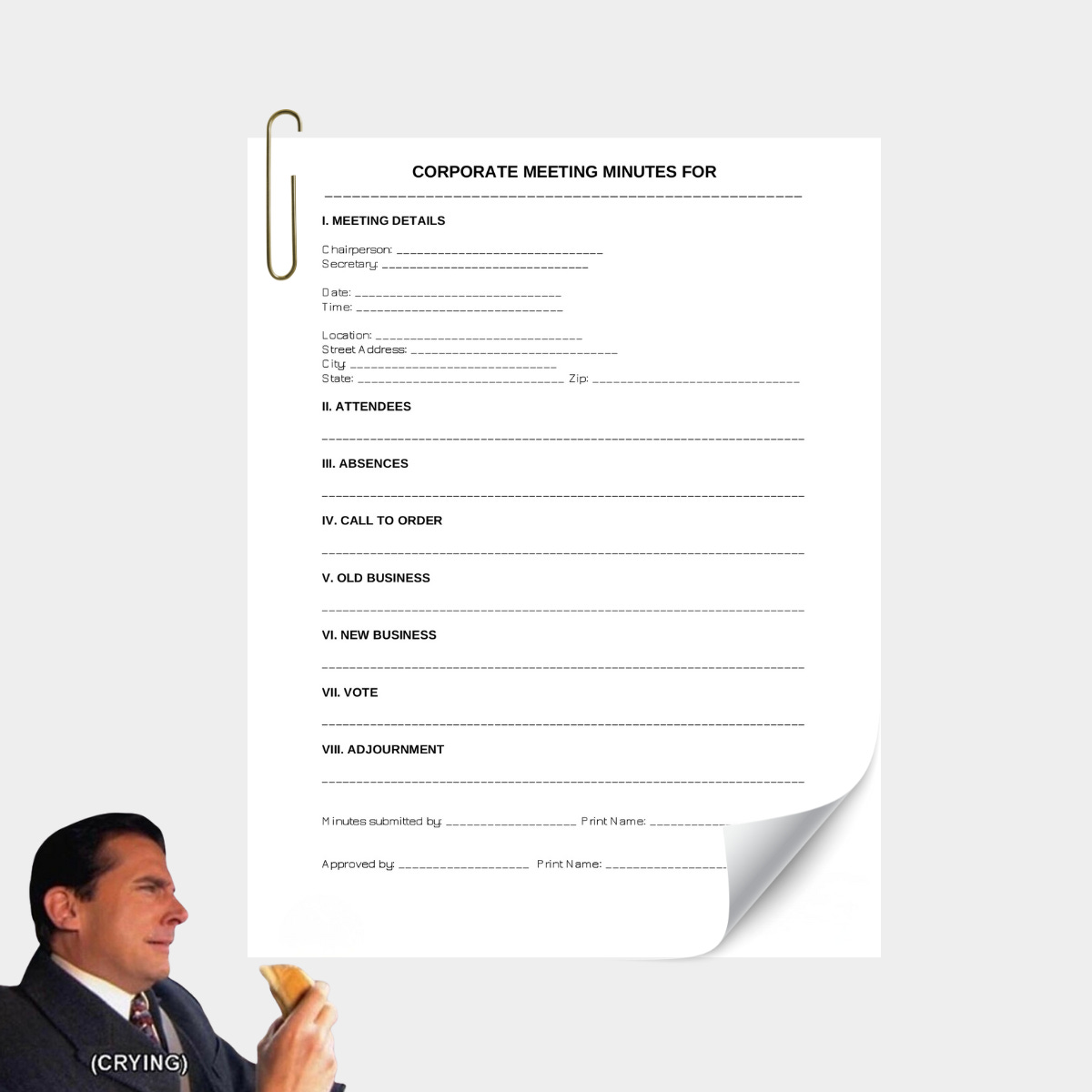
Later on, assistants disappeared. Responsibility was distributed across everyone in the room. Everything moved from pen and paper to e-mails and shared documents. That made the memory of the meeting become fragmented, and knowledge of what happened was boiled down to action items with responsible individuals.
The velocity increased, so did the volume of meetings, which produced more information we could remember and process. Just a regular day for anyone who works in tech fits in 5 hours a day on conference calls on average, which are both internal and external calls where you need to lead a conversation, make decisions, and turn them into action points. That’s A LOT to control in one single moment! At the end of the day, we’re human beings with an ancient cerebral apparatus that struggles to capture all that information.
The real shift happened with the switch from the necessity of just writing notes to capturing reality.
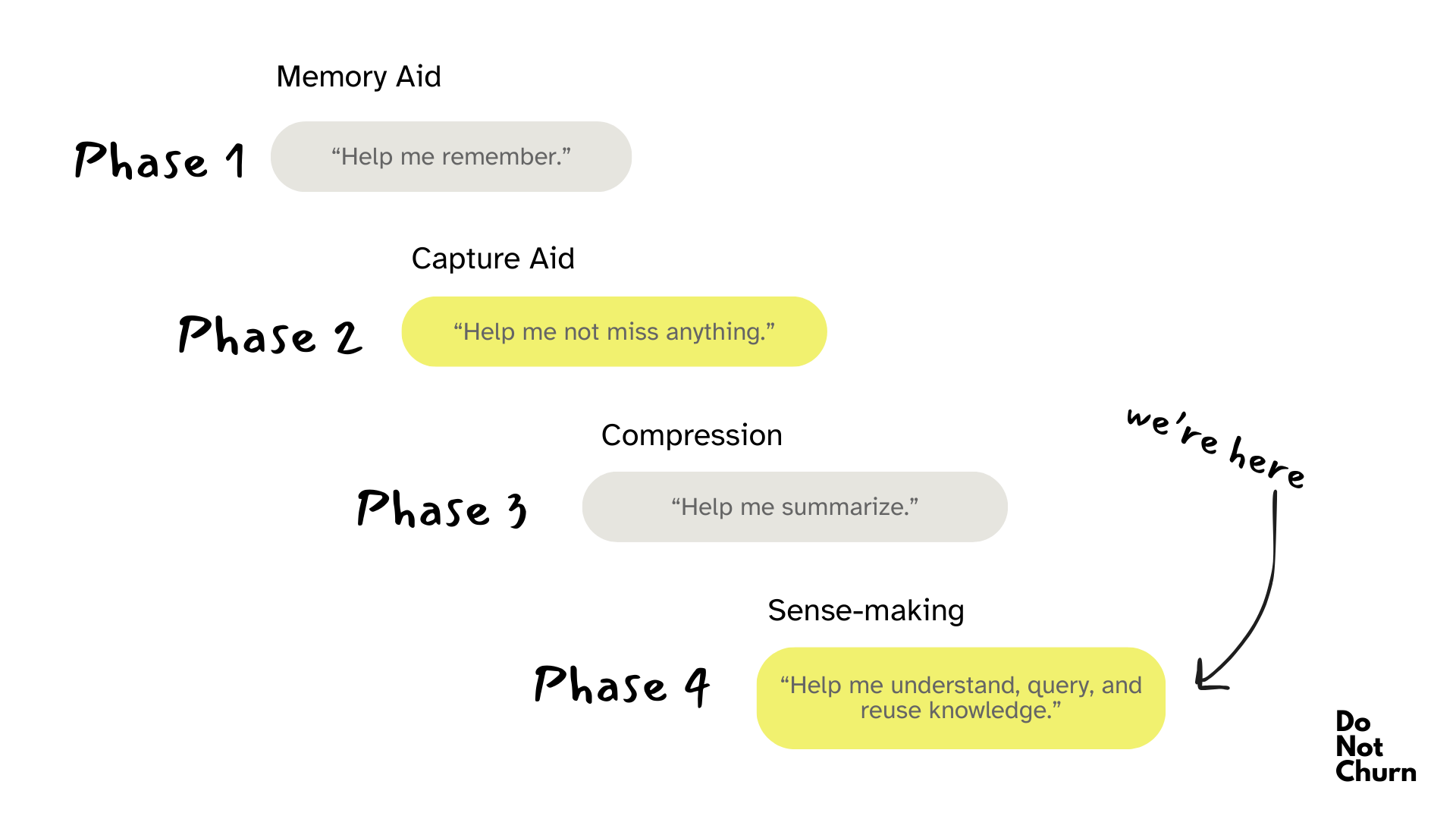
For decades, note-taking has been evolving — from handwritten minutes to transcripts, summaries, and now AI sense-making. On the surface, this looks like a tooling upgrade.
In reality, it reflects something more structural:
The collapse of shared memory at work.
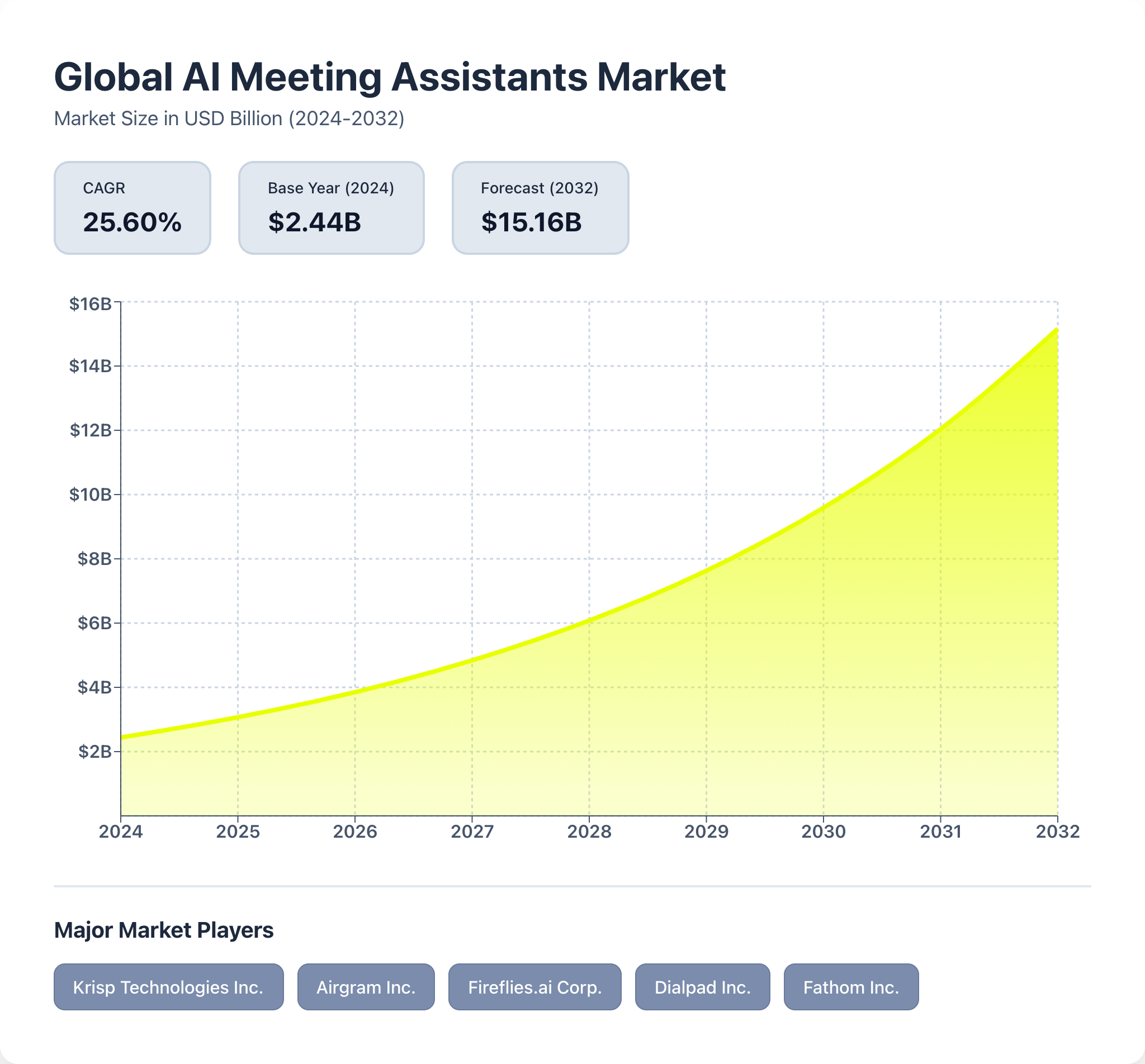
Market at a glance:
The AI meeting assistants market is scaling fast -- from $2.4B in 2024 to ~$15.2B by 2032, growing at a ~25% CAGR, driven by remote work, meeting overload, and AI-native workflows. The broader gravity includes transcription and workflow tooling, making this a structurally expanding category rather than a niche feature.
The deeper evolution: how user intent actually changed
AI note-taking replaced forgetting, then rewatching, and now it’s replacing re-thinking from scratch.
Granola, CocoNote, and Voice Notes are not variations of the same product. They are answers to different breakdowns in modern knowledge work and reality capture.
Granola
Granola is optimized for what I’d call event-based utility and does its job extremely well.
Primary intent: Business clarity
Job it closes:
“I want meetings to stop leaking decisions, context, and action items.
And…I don’t want to take notes in meetings myself to stay focused.”
It translates to:
Capture ✔️ > Summarize ✔️ > Converse with the meeting ✔️ > Extract outcomes ✔️
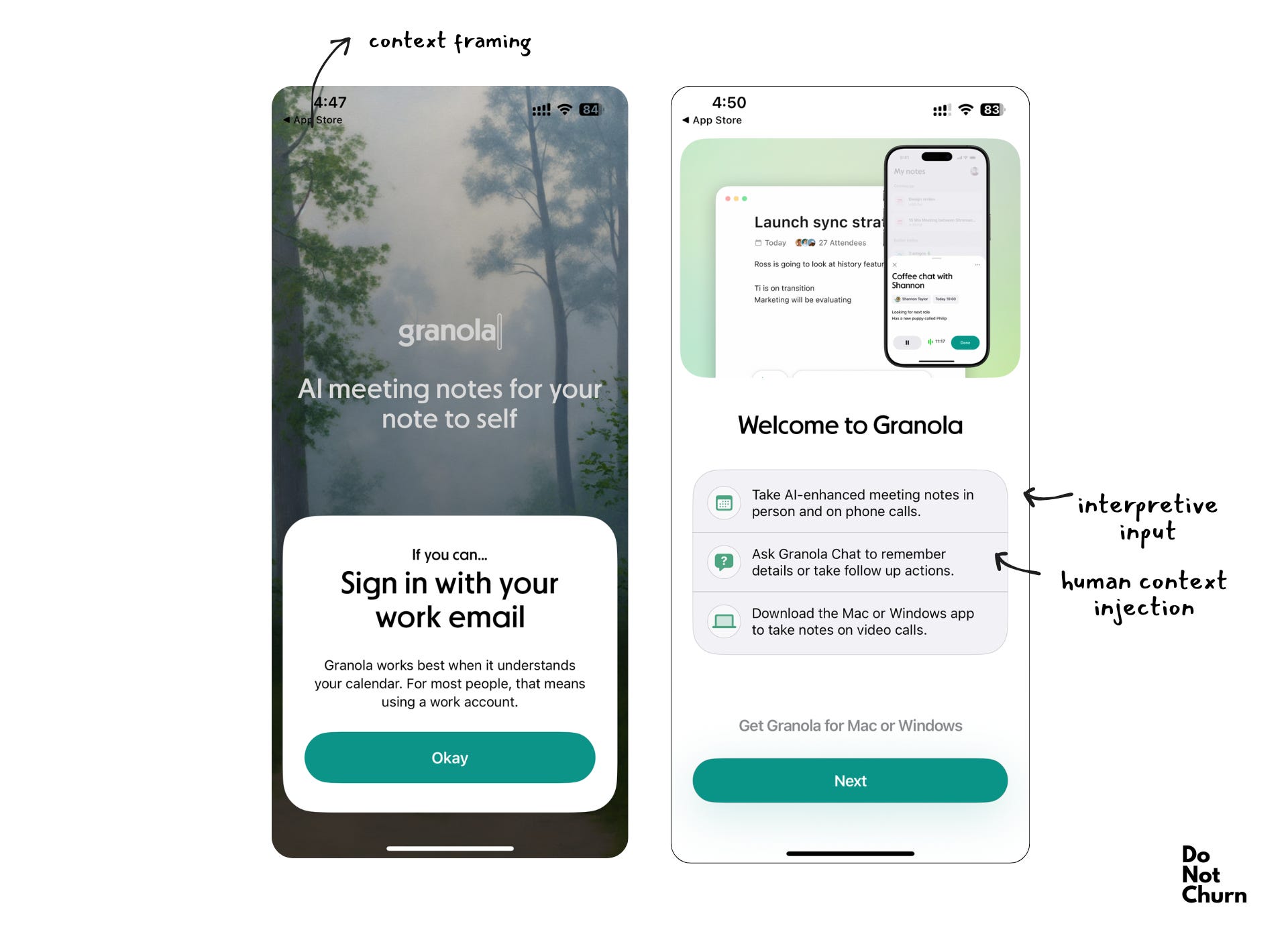
Optimized for: • Meetings • Action items • Decisions • Follow-ups
Granola intentionally ignores learning, knowledge retention, memory systems, and personal exploration. It treats notes as infrastructure, not knowledge.
Once the meeting is over, the value is mostly extracted.
Best users: • Founders • PMs • Operators • Sales/partnerships
Granola does not need deep knowledge accumulation to reduce churn. Instead, it should expand sideways across the meeting lifecycle.
When retention depends on meeting volume, the winning strategy is not compounding value -- it’s unavoidable presence.
Coconote
Coconote is an AI note-taking product built for people who consume more information than they can process. Coconote nailed that notes are not the output, but the actual understanding is.
Job it closes:
“Help me turn raw content into something I actually understand, remember, and can reuse.”
It translates to:
Capture ✔️ > Transcribe ✔️ > Summarize ✔️ > Converse ✔️ > Internalize ✔️ > Reuse ✔️
Best user: • Knowledge workers who learn continuously • Founders in exploration mode • Researchers, writers, creators • Language learners • Curious generalists
Coconote fixes what meetings, lectures, podcasts, and content leave behind: fragmented understanding.
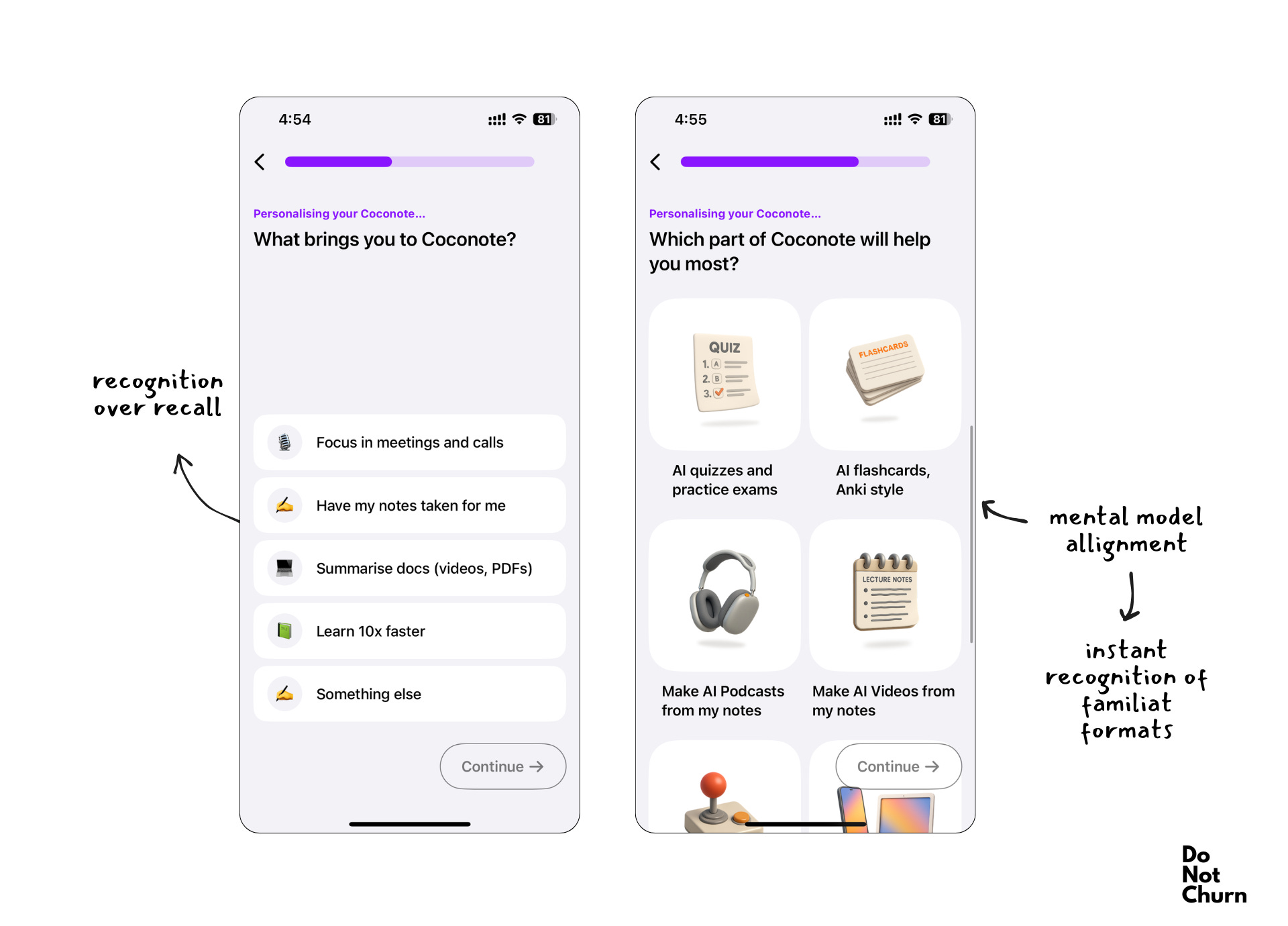
While tools like Granola replace the human meeting scribe, Coconote replaces the cognitive work people never have time to do.
Coconote has a compounding value over accumulated information, knowledge, and, more importantly, understanding. That’s why its churn profile looks fundamentally different.
Coconote has clearly nailed AI-powered capture and sense-making.
Where churn can emerge is after the first “wow” moment, when users start returning to their notes.
A key friction point is how easy it is to inject human context back into AI-generated notes. Making it equally easy to add human context -- especially on desktop -- is key to long-term retention.
Voicenotes
Voicenotes is a lightweight voice-first note-taking tool designed to remove friction between a thought and its capture. It doesn’t try to manage meetings, help you learn, it doesn’t try to become your memory system.
It tries to be faster than forgetting.
Job it closes:
“Help me get ideas out of my head before I forget them.”
It translates to: Capture ✔️ > Transcribe ✔️ > (Optional) Light summary ✔️
Best user: • Casual users • People who think out loud and usually on the go • People who don’t want a system • Users allergic to setup or structure
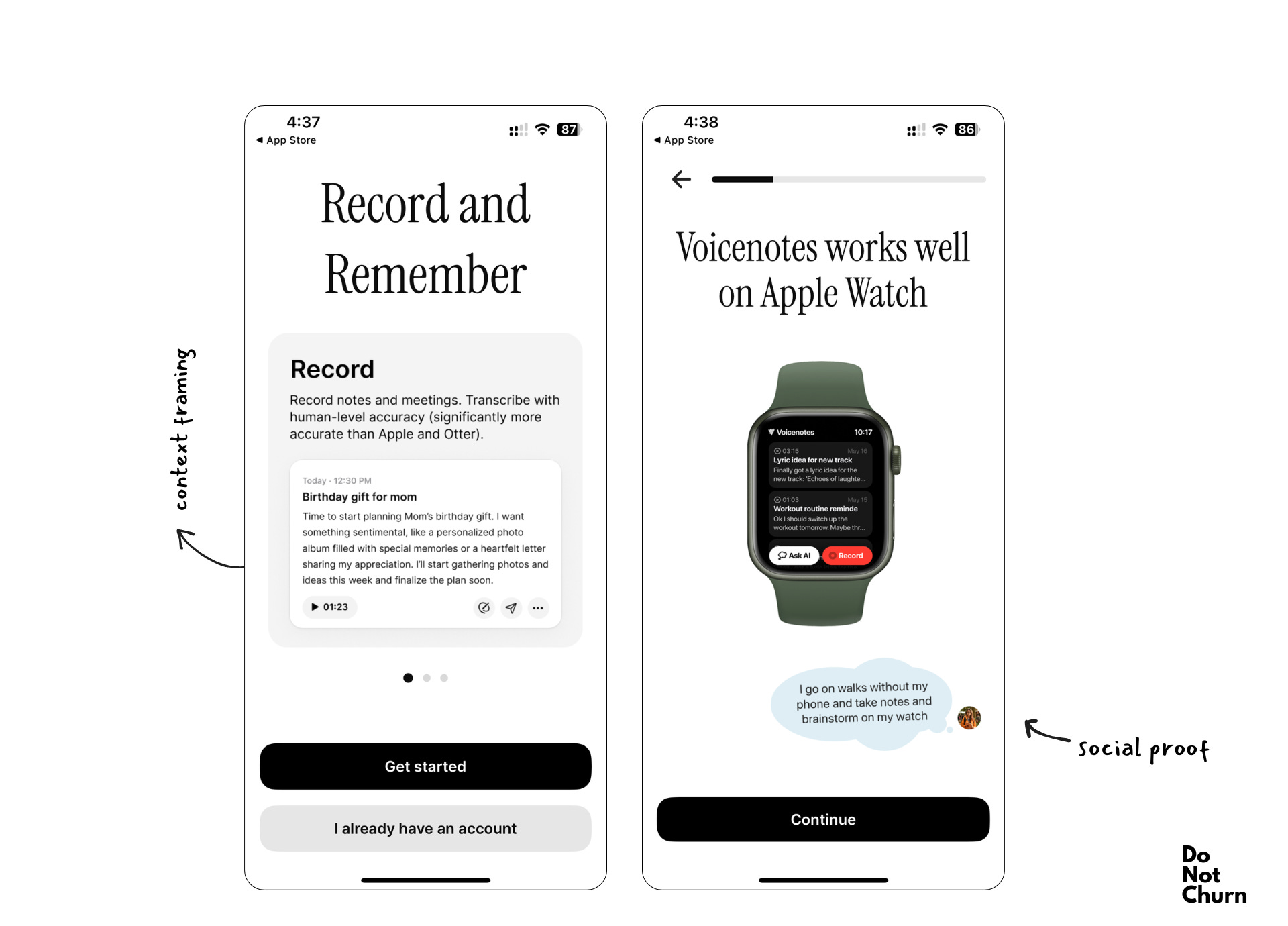
Voicenotes nailed ultra-low-friction, voice-first capture -- getting thoughts out of your head instantly, in motion, with zero setup or cognitive load, exactly when typing would be too slow or too inconvenient. The app allows you to turn the notes into other formats like a blog post, to do list, or an e-mail.
This is a behaviorally aligned product.
Voicenotes is a strong capture utility with excellent behavioral alignment -- but its churn risk is structural. Outputs are useful, but might feel detached
Turning a voice note into: • a blog post • a to-do list • a prompt - is powerful -- but each output often lives as a one-off artifact, not part of a growing thinking thread.
Over time, users may feel that it helps to produce things, but it doesn’t help to build anything.
Linking transformations back to the original note, showing evolution (idea → outline → post) and making reuse feel cumulative, not transactional, could help shift that.
Voicenotes excels at capture now. But if past notes don’t resurface meaningfully, users forget the app helped them before.
Churn-preventive lever:
“You said this 3 weeks ago -- still relevant?”
“You’ve talked about this theme before.”
Gentle reminders, not notifications spam
AI note-taking didn’t converge into a single super-tool but split along lines of user intent.
Some tools exist to preserve decisions.
Others exist to turn information into understanding.
Others exist to capture ideas before they fade.
Churn emerges when a tool drifts away from the promise it originally made.
In note-taking, retention grows when notes stay connected to their original purpose.
A note remains valuable only if its reason for existing is still visible later.
Key takeaways:
Note-taking tools compete on the cognitive failure they address, not on feature depth.
Event-based tools succeed through reliability, consistency, and constant presence.
Sense-making tools retain users by compounding understanding over time.
Capture-first tools depend on whether past thoughts resurface with relevance.
Retention follows intent alignment; churn begins when the product starts solving a different job than the one the user came for.