For a decade, I helped engineer activation in dating and social apps, and it always came down to getting users to do the work themselves. Swipe enough that the algorithm learned your taste, and the faces started matching what you actually wanted. Start three or four conversations, so there is someone worth coming back to. Keep circling back to look for someone better.
Even if that was not an entirely evil mission, the arrival point for a user happened to be a permanent search that gave the sense of progress - searching was the product, and a user who stopped searching was one the product had already lost. Every motion in that loop was the user’s own, and the doing was the attachment. I wrote in an earlier issue about how three decades of dating apps expired their users’ trust, rewarding motion over outcomes until people stopped believing the product was moving them anywhere and slowly disengaged.
At least the user did the searching themselves, and that effort built a layer of real attachment as a byproduct, the profiles they wrote, the conversations they tended.
I have now had the same conversation a dozen times with teams wiring AI agents into that loop, and it always opens the same way: our activation numbers have never looked better, so why is retention falling? What AI agent that takes over the doing that builds attachment, is now manufacturing the feeling of value with the user barely doing anything.
By the time you finish reading this, you’ll be able to spot activation debt in your own funnel, run a quick audit on your onboarding, place any AI feature on the earned-to-delivered spectrum, choose the one earned moment worth rebuilding, and watch the two numbers that expose the debt before it ever shows up as churn. With named products, real metrics, and a prompt you can build with today.
The pattern repeats.
The activation chart flashes green, the onboarding team takes the QBR victory lap, and a few weeks later, the same cohort is retaining worse than the clumsier flow it replaced. Teams reach for the usual explanations: a messaging problem, a pricing problem, a notification-cadence problem, and spend a quarter tuning the wrong dial.
The problem isn’t that your activation is no longer working.
Put plainly:
the user got the result without ever doing the thing, so there is nothing for them to come back to.
For fifteen years, activation worked as a proxy for retention because the early action it measured was an action the user performed, and the performing was the attachment, so when the agent does that action for the user, that proxy breaks.
Before you can fix activation, you have to answer a simpler question:
How much of the work does your product still leave in the user’s hands?
That single distinction predicts almost everything that matters for retention: whether the user learns anything, whether they own anything, whether a habit forms, and whether your activation number means what you think it means.
If you’re staring at a great activation number and a sinking retention curve, here’s what you’ll have by the end of this post:
A one-sentence test and a five-minute audit prompt to locate activation debt in your funnel.
The earned-to-delivered spectrum, so you can place any AI feature and predict its grip before you ship it.
Six install-ready levers to rebuild an earned moment without adding extra work back in.
All by recognizing that activation is not one event. It is a spectrum of how much the user earned, and only the earned end of it predicts retention.
Why this matter
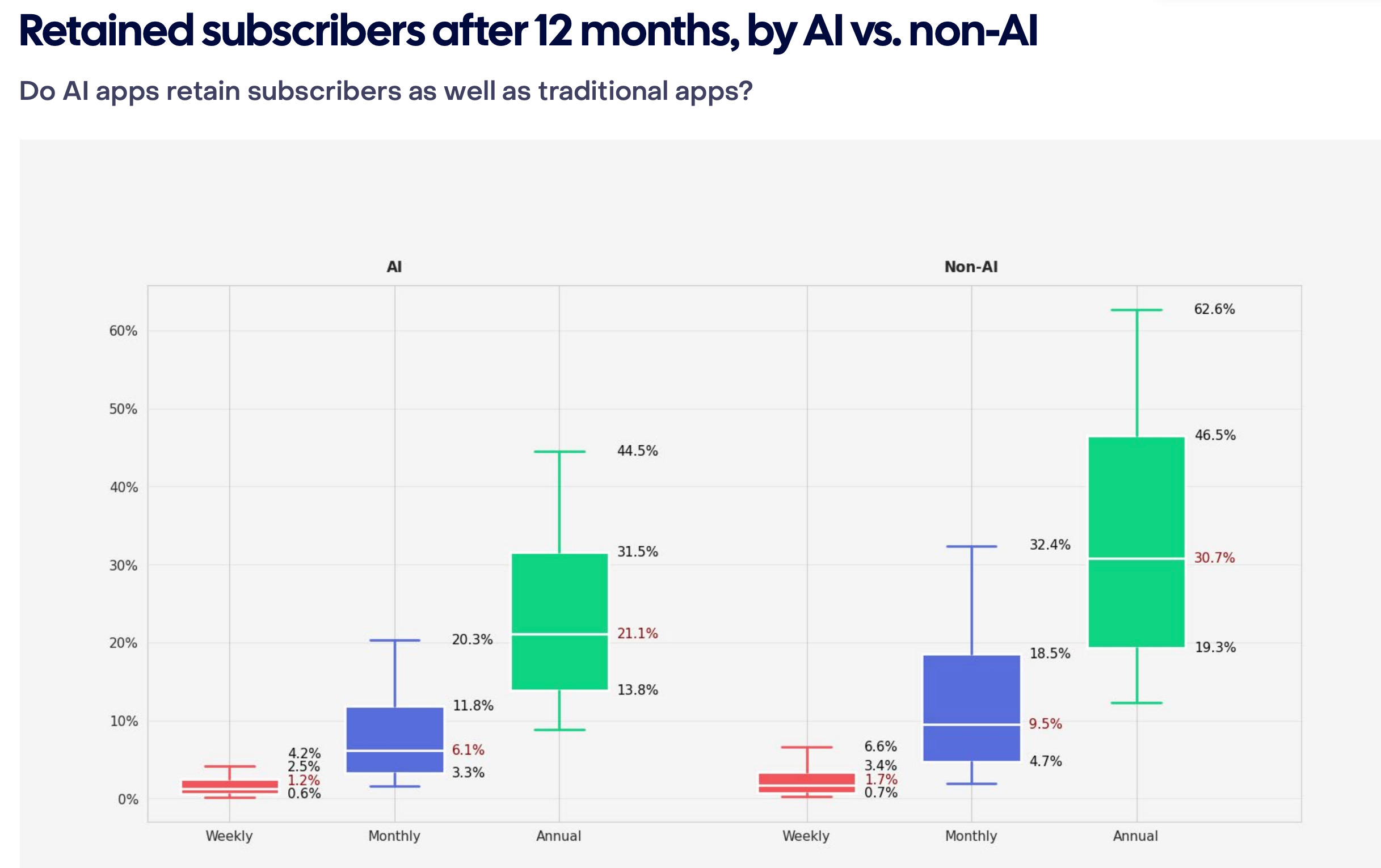
RevenueCat’s 2026 State of Subscription Apps report found AI-powered apps lose subscribers about thirty percent faster than non-AI apps at the median, with refund rates roughly twenty percent higher, even as they convert trials better, and a16z now tells teams to measure AI-product retention from month three because the early weeks are inflated by what they call AI tourists. High intake, fast leak. The acquisition engine works; the retention engine is missing a part, and the assumed part is earned effort.
About this newsletter:
Do Not Churn reads churn as a product-design problem, not a retention-team problem. If you are staring at an activated-but-leaving cohort and no one can explain why, run the prompt above on your own flow, then reply and tell me where the debt showed up. Subscribe so the next teardown lands in your inbox.
The framework: three kinds of activation
Every AI feature you ship lands somewhere on one spectrum, from work the user still does to value that is simply gifted to the user’s hands with no effort.
I’m breaking them down into three profiles to make it simpler to approach them and find a way to treat. All have a different retention profile, a different way to measure it, and a different collapse reason.
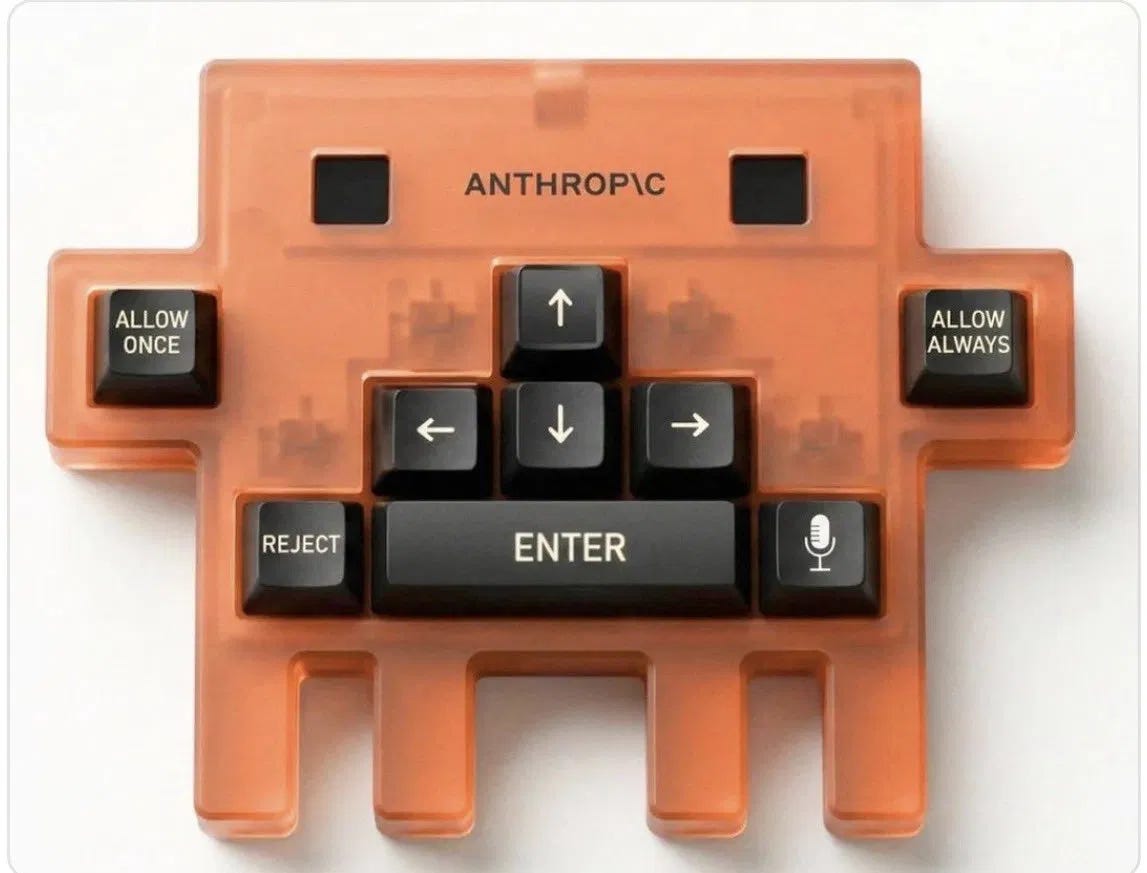
Type 1: Assisted activation
The agent accelerates the work that the user still performs.
What this is: the user stays the operator. The agent speeds up, completes, or drafts, but the user reviews, decides, and integrates every cycle, and something the user owns accumulates underneath them as they go.
How to spot it: the user could not get the outcome by doing nothing; their judgment is in the loop on every pass; an asset such as a codebase, a document, or a board compounds as they work.
The live example: Cursor.

Built by Anysphere, founded in 2022 by four MIT students and led by Michael Truell, Cursor forked Visual Studio Code and rebuilt it around AI, becoming the fastest software company ever to reach $1B ARR, roughly eighteen months, and $2B ARR by early 2026 at a $29.3B valuation.
The agent writes code and finishes your edits, but you read every diff, accept or reject it, and commit it to your own repo. It is delivered at full speed, and it still retains, because the developer is doing the work, and the codebase is the kept switching cost.
How to measure it: the share of agent output accepted without a single edit. A stable, moderate number is healthy; the leading risk indicator is that share is climbing over time.
Warning sign and the fix: when the user stops reviewing and starts accepting everything, they slide from operator to passive reviewer, the deskilling that controlled studies have already measured sets in, and the grip erodes. The fix is to keep the review an active step rather than letting the user hand off all decision power to an agent.
Type 2: Ambient activation
Value arrives with no user action at all.
What this is: the product is wired into data the user already has, so it produces value unprompted. There is no first action, no setup, nothing the user assembled.
How to spot it: the user did nothing to start it; the value appears without being asked for; if it disappeared tomorrow, the user might not even notice.
The live example: Gemini Personal Intelligence.
Google’s, launched in January 2026 and wired straight into the accounts you already have, it draws on your Gmail, Photos, YouTube, and Search history, your bookings, your purchases, and what you watch, without being asked. There is no first action to complete. The value simply starts arriving in users’ hands.
How to measure it: the gap between reach and protected behavior. Wide reach with nothing the user would fight to keep is the signature of maximum debt.
Warning sign and the fix: invisible value cannot be missed, so it builds no loss aversion and no switching cost, and a rival assistant wired to the same data is a flat substitute. The fix is to make the user curate what it learned, confirm it, correct it, shape it, so a sense of authorship forms after the fact and leaves them something of their own to lose.
Type 3: Earned activation
The user does the work and owns the result.
What this is: the user assembles, configures, or contributes something themselves, and that effort is what produces both the value and the attachment at the same time.
How to spot it: setup takes real work; the user supplies or builds something; what they end up with feels like theirs.
The live example: OpenClaw.

An open-source agent built by developer Peter Steinberger that you run on your own machine with your own API keys, OpenClaw is the hardest tool here to start and the one its users abandon least.
A running USER.md accumulates your preferences and patterns until, after roughly thirty days, the agent behaves in a way no fresh install could imitate.
How to measure it: setup-completion rate against thirty-day-plus retention. Expect brutal front-loaded drop-off and an unusually flat curve for everyone who crosses the threshold.
Warning sign and the fix: the risk is that setup is so hard most people never activate at all. The fix is not to make setup easier everywhere; it is to preserve one act of real ownership, because a 2012 study by Norton, Mochon and Ariely, the IKEA effect, showed that labor invested in something is exactly what converts into how much it would hurt to abandon.
The prompt to detect an activation debt
The day after an agent finishes setting up your product, can the user explain in one plain sentence what it does for them? If they cannot, you delivered value and didn't develop a habit, and that gap is your activation debt.
To find where it is building up, paste your real onboarding into this:
You are a retention strategist. Here is my product's onboarding,
step by step: [paste every step from signup to first real use].

1. Score each step for USER effort (none / light / real work) and
   value returned (none / partial / core payoff).
2. Mark the step where the user first feels the product worked.
   Tell me whether that earned moment exists at all.
3. Flag every step an agent already does, or could do within 12
   months. For each, name what the user stops learning when it does.
4. After an agent runs this flow, could the user explain in one
   sentence what the product does for them? If not, name the habit
   that never forms.
5. Give me three task cards to re-introduce ONE earned moment the
   agent does not take: a choice, a contribution, or an ownership
   act the user keeps. Each card: title, the change to the flow,
   the retention behavior it should create.

Be specific. If there is no earned moment even today, say so first.
Pull two numbers for the same cohort and put them side by side: your activation rate, or for an agentic product, your signup-to-first-output rate, and your month-three retention, since week one is noise for AI tools.
If activation is climbing while month-three retention dips > the spread between the two lines is your activation debt.
Segment by whether the user hit any earned moment in their first session, the kept decision, the contributed asset, the owned artifact, and the earned-moment cohort is the one whose curve flattens instead of falling.
That single split tells you which steps to stop automating.
The split
Activation didn’t stay one thing; it split along how much of the work each product leaves in the user’s hands. Assisted tools like Cursor deliver at full speed but keep the user in the loop and let an owned asset compound underneath them, which is why they hold. Ambient tools like Gemini Personal Intelligence deliver value the user never asked for and therefore cannot miss, which is why they leak. Earned tools like OpenClaw make the user do everything and keep them through the effort that doing required.
Churn emerges when value arrives without ever being earned, because nothing learned and nothing owned is nothing to come back for, and retention in the agentic era grows when a product protects one motion the agent could have taken and deliberately leaves it to the user.
Five takeaways
Activation is a spectrum of how much the user earned, and only the earned end predicts retention; the number alone tells you nothing.
Assisted tools retain because the user still does the work and an owned asset compounds underneath them; speed was never the problem.
Ambient tools leak hardest, because value the user never assembled is value they never feel and never miss.
The hardest onboarding on a list is often the stickiest, because invested effort is what the IKEA effect converts into attachment.
Retention follows earned effort; churn begins the moment the agent performs the action that was supposed to be the user’s.
PS: this article was born under the June Portuguese sun, the week I turned thirty.