


For the past three years, the entire AI-product industry has been centered around one belief: access to a model is the advantage. Teams ‘tokenmaxxed’, burned as many frontier-model tokens as they were able to afford (until they couldn’t afford any longer), often encouraged by management, as proof that they were being ambitious and AI-pilled. The model was the moat (at least it felt like it).
The Fable 5.1 drop on Sept 1 shows that belief is outdated. Anthropic shipped its new flagship, and the same day it was live on AWS Bedrock, Google Vertex, Azure Foundry, the Vercel AI Gateway, OpenRouter, LiteLLM, Cursor, GitHub Copilot, Microsoft 365 Copilot, Amp, Kilo Code, Perplexity, Harvey, and Lovable. The best model on earth had a competitive half-life measured in hours. When every product can offer the identical frontier model as fast as it’s available, "we have the best model" is no longer a unique selling feature or a moat.
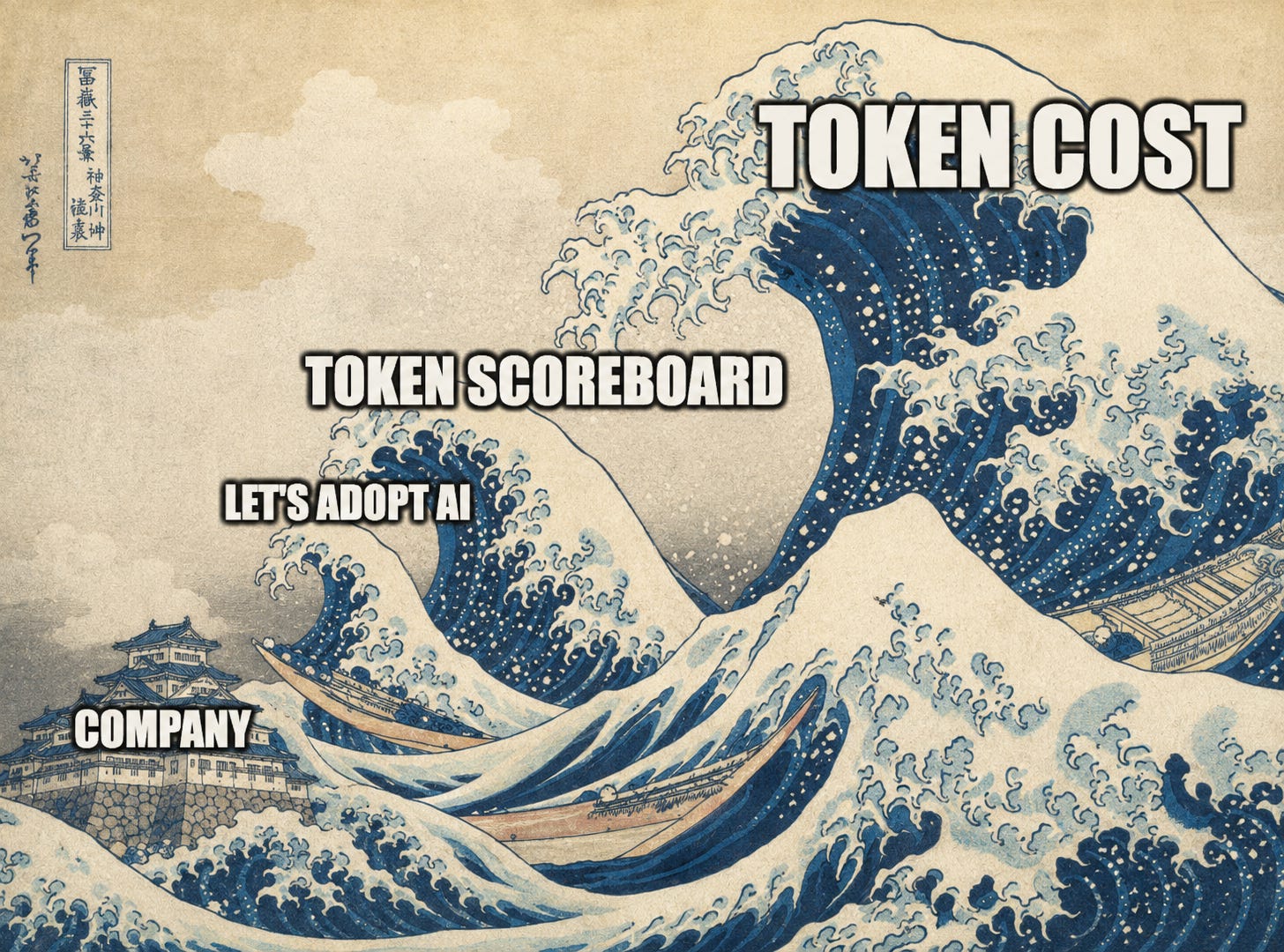
While I was writing this article, right when I was 80% through, I got an email that landed in my inbox with a headline stating that OpenAI just released Astra, a new model that is the closest thing to AGI we've seen yet.
It has been called "the world's most intelligent and aligned model" - the closest thing to AGI anyone has shipped. And here's the tell: it wasn't consumer-available on release. It rolled out to a limited set of organizations first, with access for ChatGPT Plus/Pro/Business/Enterprise users promised: “over the coming days."
You'd expect the closest-to-AGI model to be the thing everyone would be willing to get on board with. For a regular consumer, it mostly won't be, because what actually keeps an everyday user isn't the raw intelligence ceiling; it's the interface gravity of the workspace they already live in.
For someone whose work and life are already set up inside one agent window - where they don't pick a tool and go build, they just keep talking, and the thing to build materializes in the same chat when there's context for it (a rendered HTML artifact, a PDF, a doc that persists, work that lives on in a Cowork-style workspace) - a marginally smarter model behind a different door might not be an incentive to move.

Valuemaxxing is the new flex
As frontier tokens got expensive, the flex inverted - from “I run the latest, most powerful model” to “I know which model to run for each task.”
The category’s center of gravity is moving off the model and onto the layer that decides, routes, remembers, and integrates. Now, the experience layer is the new moat.
Whenever you open Instagram, you don’t want to think or prompt that you like watching videos with silly dogs or cooking recipes; you just want it to be shown to you.
Just like this, retention belongs to whoever makes the model invisible - the product that routes to the right model, at the right cost, inside a workflow the user won't need to rebuild - because the user stops being able to tell (or care) which model they're on, and starts staying for everything wrapped around it.
A model can produce an impressive answer and still leave you with a broken app. It can write convincing code that never runs or create a finished-looking checkout page that saves the wrong data. On a benchmark, the response may look excellent. In the browser, it may be another story.
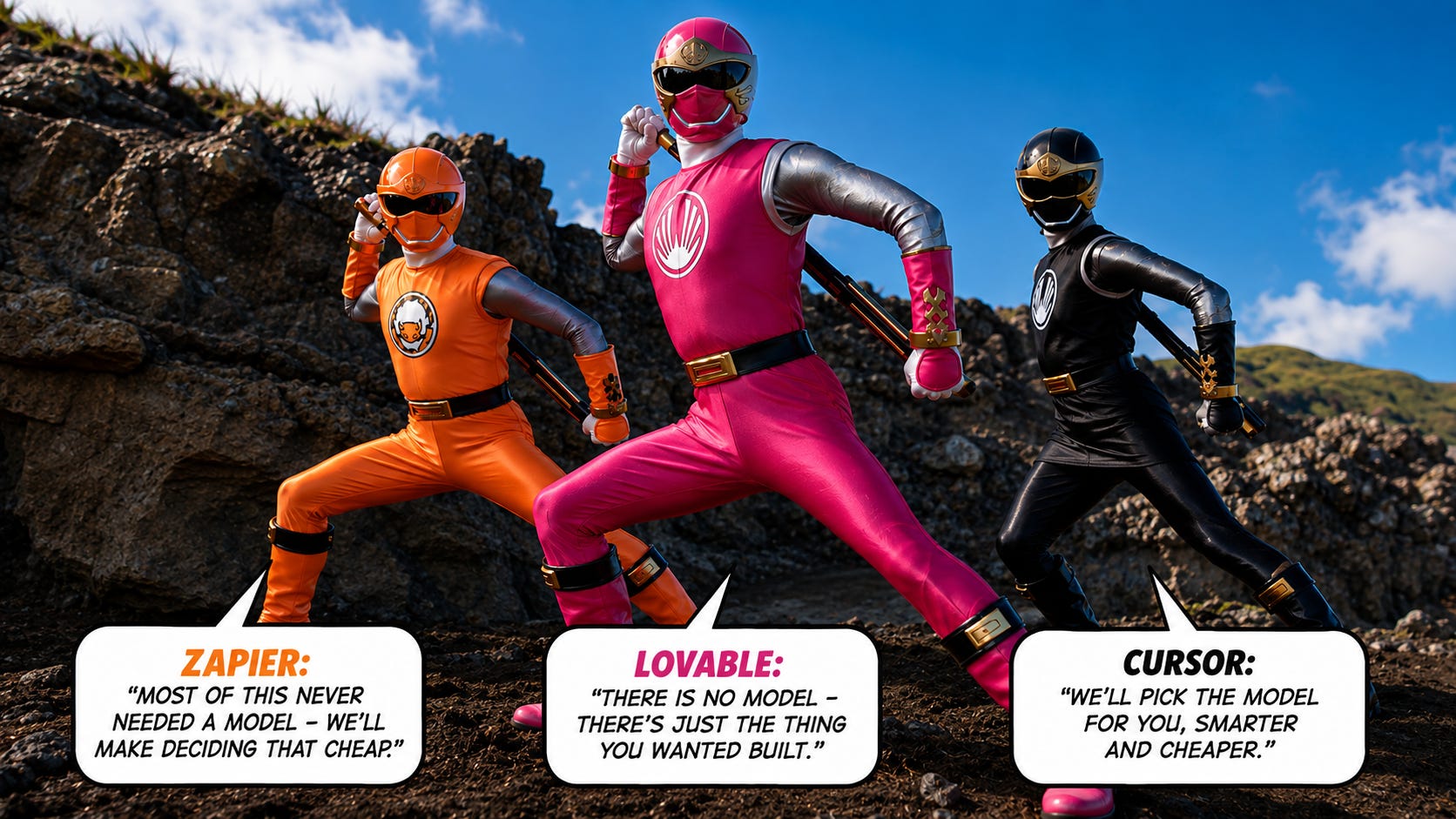
Here, three products solve the problem of maximizing value for money, while also easing decision fatigue.
Cursor
AI-native code editor
Founded 2022 in San Francisco by four MIT students (CEO Michael Truell). Cursor is an AI-first IDE - autocomplete, chat, and agentic multi-file editing built into the editor — and became the default AI coding tool for a huge swath of professional engineers. Revenue ramp is historic: ~$100M ARR (Jan 2025) to roughly $4B ARR by May 2026. Funding went $900M Series C at $9.9B (June 2025) → $2.3B Series D at $29.3B (Nov 2025).
Anysphere was reportedly acquired by SpaceX in a ~$60B all-stock deal that closed in mid-August 2026, with Cursor now operating inside the SpaceXAI division. They released a Cursor Router (July 2026): automatic per-request model selection across Intelligence/Balance/Cost modes, trained on 600k+ live requests, claiming ~60% lower cost.
Cursor is optimized for what I’d call not making you become a model expert.
Job it does: "I want the right model for this exact task. And I don't want to read a benchmark leaderboard every morning to get it."
It translates to:
You write a request
The Router reads the task, not just the prompt length
It routes to the model that clears the bar for the lowest cost
It can switch models mid-task as the work changes
You never touch the dropdown.
The router was trained on 600,000+ live requests - proprietary usage data no rival has. The model belongs to 3d party, but the routing intelligence is what Cursor owns.
Best users:
Engineering teams with a real token bill
Eng managers tired of “which model should I use?”
Startups optimizing burn
Enterprises standardizing a model policy
Churn watch: The risk arrives the first time a senior engineer suspects “Cost” mode quietly downgraded a task that mattered — a subtly wrong refactor, a shallow answer on a hard bug. The metric is override rate: how often power users flip Auto back to a named model. Once that climbs, the router has stopped being a convenience and become a thing to babysit — and a router you babysit is worse than no router. The counter-lever isn’t a smarter model, it’s transparency: showing which model ran and why, so an automatic choice stays legible. (Cursor’s ~60%-cheaper number is its own and third-party-unverified — that gap is the trust it has to earn.)
Lovable
AI app builder for non-engineers.
Founded 2023 in Stockholm by Anton Osika and Fabian Hedin, growing out of their open-source GPT Engineer project. It turns a plain-language description into a working full-stack web app - auth, database, APIs - with no traditional coding, aimed squarely at non-technical builders. It's been one of the fastest-scaling software companies on record: ~$100M ARR (July 2025) → $200M (Nov 2025) → $500M ARR by May 2026, with ~8M users. Funding tracked the curve: $200M Series A at $1.8B (July 2025), $330M Series B at $6.6B (Dec 2025), and a $400M Series C at a $13.3B valuation in August 2026 (led by Menlo Ventures) - ~$950M raised total. Latest product moves are the heart of its strategy: its August manifesto "The model picker is a dead end" and a "control plane" that auto-assigns build steps to different models, plus adopting Claude Fable 5.1 same-day on Sept 1.
Job it does: “I want the app I pictured to exist by tonight, and I don’t want to know, choose, or think about which model is building it.”
Primary intent: Build the thing without getting into the weeds of tech.
It translates to:
You describe what you want
A control plane breaks the build into parts
Each part goes to whichever model is best at it, invisibly (to a user)
Failures feed the eval loop, not your lap
You get an app, not a model decision.
Best users:
Non-technical founders
PMs prototyping without engineering
Designers shipping real products
Solo operators who’d never open a model dropdown
Churn watch: Lovable’s risk is the vibe-coding cliff - the wow of the first generation fades, and retention lives or dies on the second and third session, when the app has to keep working and evolving. Because the model is hidden, every failure is charged to Lovable, not to “a bad model” - the user can only say, “Lovable didn’t make it work.”
The metric is return-to-build rate: if fewer than ~30–40% of first builds come back for a second within the first couple of weeks, the magic was a demo instead of a habit. The counter-lever is making the output improvable in place, so the user never wishes to look under the hood.
Zapier
workflow automation / the "glue" layer
Founded in 2011, a Y Combinator (S12) company, by Wade Foster (CEO), Bryan Helmig, and Mike Knoop. Zapier connects thousands of SaaS apps so non-developers can automate multi-step workflows ("when X happens, do Y") without code - the original no-code automation layer. It's famously capital-efficient: roughly $310M+ ARR on about $1.3M ever raised, last valued around $5B (2021 tender offer), and still independent. Its recent direction is a full lean into AI: Copilot (describe a workflow in a chat window, and it drafts the Zap, which you then build from or tweak), Zapier Agents, and a pointed "valuemaxxing" positioning - automate the deterministic work and only spend a model where a task actually needs judgment, claiming ~71% average cost savings across modeled agent workflows.
Primary intent: Judgment only where it’s needed.
Job it does: “I want AI on the parts of my work that actually take judgment.
And I don’t want to pay a model to ‘think’ about a task that has exactly one right answer.”
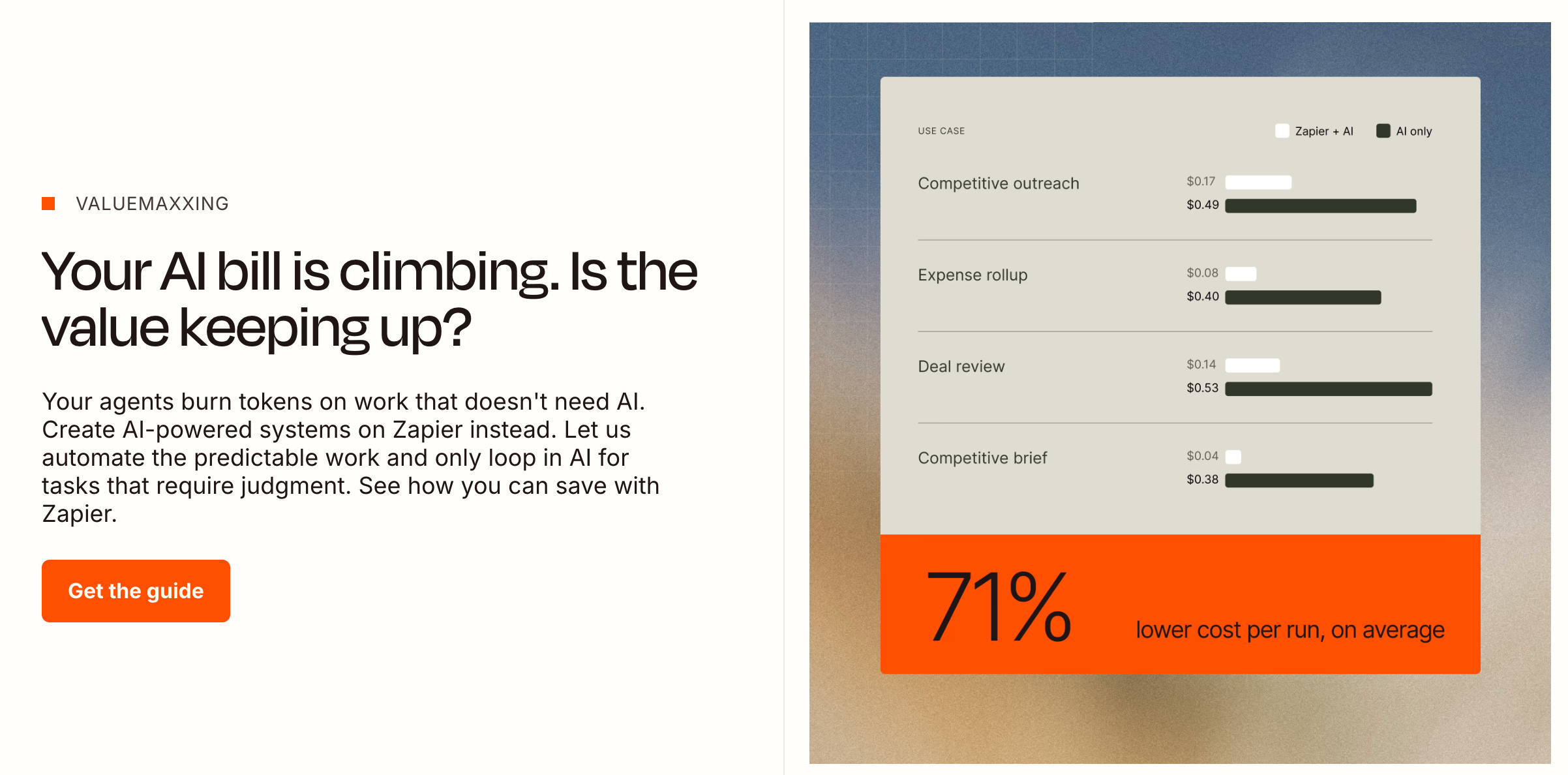
It translates to:
Map the process into steps
Deterministic steps run as plain automation, no tokens
Only the judgment steps call a model
Swap the model behind a step later without rebuilding
The whole thing runs cheaper than pushing all of it through AI.
Best users:
Ops leads watching an AI bill climb
Automation builders wiring real workflows
Small teams with no ML budget
Anyone who’s watched an agent burn tokens on a rules problem
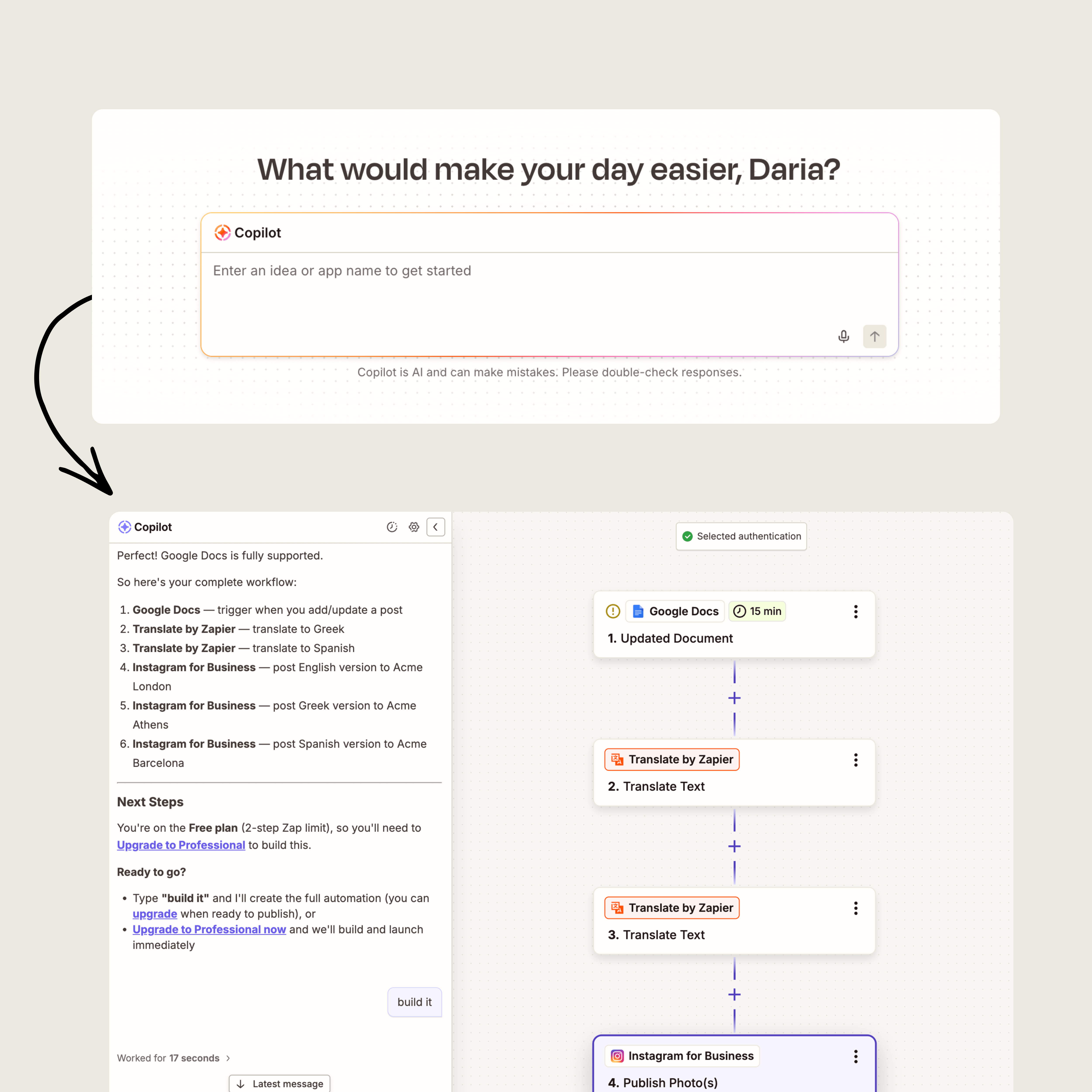
Churn watch: Credit where it's due - Zapier already attacks the blank-canvas problem. Its Copilot opens the interaction in a chat window, drafts the workflow from a plain-language description, and gives you the choice: build from zero, or take the draft and tweak it. The remaining friction is subtler, and it adds to the churn score: the draft still hands you a workflow you have to understand, verify, and own - the copilot writes the first pass, but you're still accountable for whether the logic is right and which steps quietly needed AI. So the churn moment comes when fully-agentic tools that "just do the whole thing" make even reviewing and maintaining a draft feel like overhead. The signal is how far users get from "described it" to "trusted it in production" without hand-holding. The counter-lever is more proof: closing the gap between drafting the workflow and trusting it runs correctly, so tweaking reads as control instead of extra homework.
Decision fatigue has never been more real
Being a human and a professional in 2026 is the most exciting thing that ever existed.
The abundance of opportunities is dizzying. One can build a career in any space with an option to work from anywhere in the world. You have access to all the books ever published and the smartest AI models and tools right from your computer. There’re thousands of ready-to-go ideas flowing on social media for how to make money, get a job, build a startup, or land a promotion than ever before. It has never been harder to avoid getting lost among a thousand ideas and opportunities, to decide on what you want to work on, to commit and stay focused without drifting off topic for long enough before actually seeing the compounding results.
All that creates enormous decision fatigue, which decreases our efficiency by the same proportion that AI amplifies it. In this context, having fewer things to decide on while interacting with a product is something that could make a significant difference. I am sure that when you open your laptop in the morning to get something done - create a report, prepare an SOW for a client, test a new acquisition channel - you don’t think to yourself: I want to become an expert in AI. All you want is just to get things done in the fastest, most energy-efficient way possible.
Tara Seshan, Product Lead at OpenAI, says that their North Star is that users do not have to decide between Chat or Work (which is Codex undercover), but at this moment it’s still on the user to understand what they’re trying to do and match it with the capabilities and limitations of both products.
Retention follows whoever makes the choice invisible and the value obvious.
The AI-product stack didn't converge into one super-tool. It split along the lines of what each player decided to own when the model itself stopped being a competitive advantage.
When the best model is available to everyone within hours, having it stops being a moat, and how you decide to spend it - whether a task needs a model, which model it needs, and whether the user ever sees that choice - becomes the entire game.