

If you opened your phone this morning, you probably checked at least three different apps before even getting out of bed: your calendar to see what meetings you have, your to-do list to remember what’s urgent, maybe your weather app to decide what to wear.
Then you checked Slack to see what blew up overnight. Then email. Then your notes app to find that thing you wrote down yesterday. By the time you’ve actually started your day, you’ve already switched contexts seven times.
Hard to imagine we thought this was normal.
That wasn’t always the case.
In 2016, the productivity software landscape celebrated specialization.
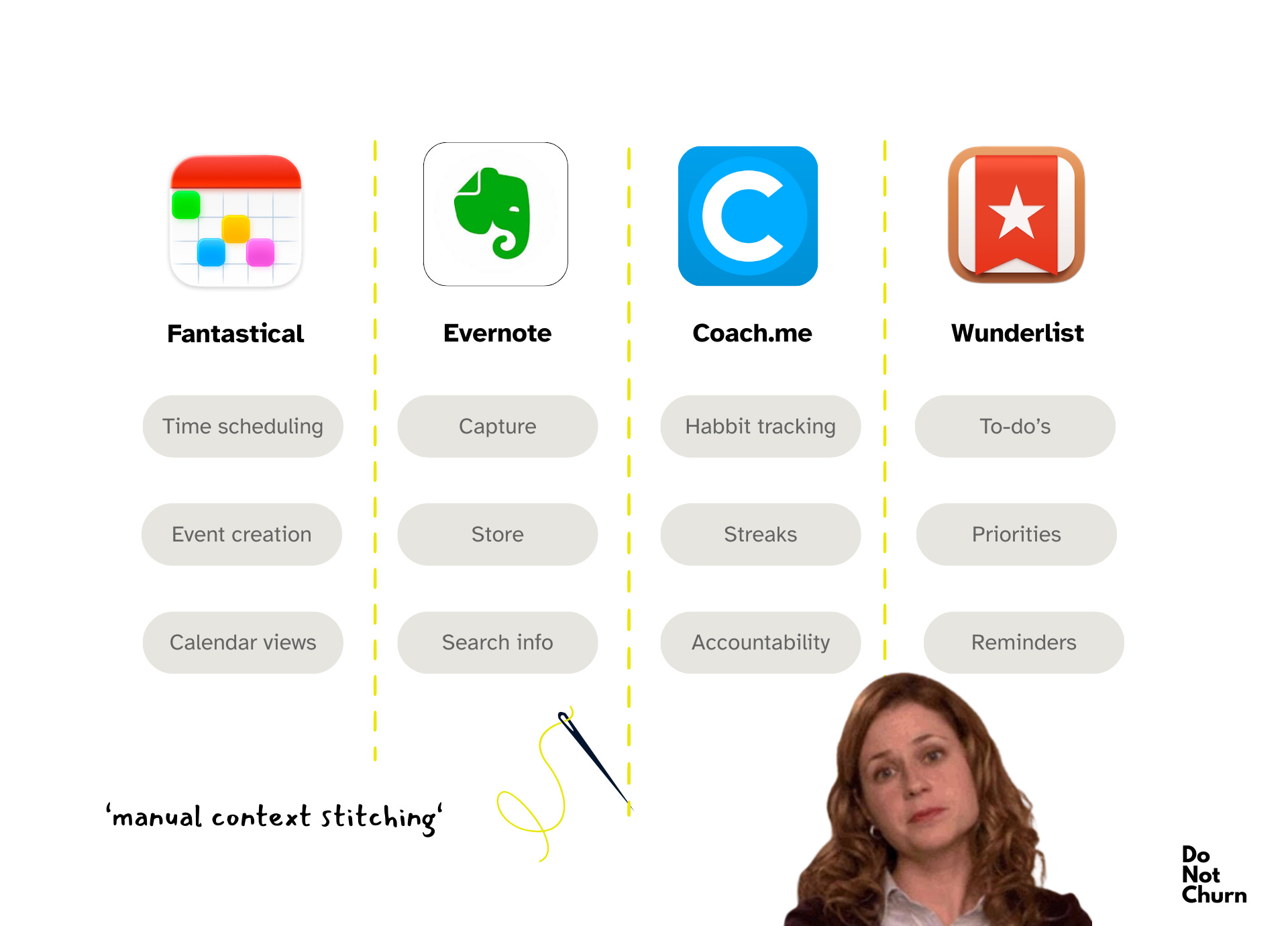
You had a calendar app (Fantastical), a separate task manager (Wunderlist), another app for notes (Evernote), different tools for habits (Coach.me), and distinct platforms for communication.
The philosophy was ‘best-of-breed’, - to pick the absolute best tool for each job.
Users accepted the coordination tax. We manually copied information between apps. We got good at remembering which system held what information. Context switching was just the cost of having the right tool for everything. We have to be doing this constant ‘manual context stitching’.
The real shift happened when we stopped being able to hold it all together.
The average knowledge worker now juggles 9-10 applications daily, switching between them over 1,200 times. Twelve hundred context switches. Every single day.
The cost: 40% of productive time lost. 23 minutes to regain focus after each interruption. An estimated $450 billion annually in the U.S. alone.
What started as ‘best-of-breed’; had become ‘death by a thousand apps’.
Market at a glance:
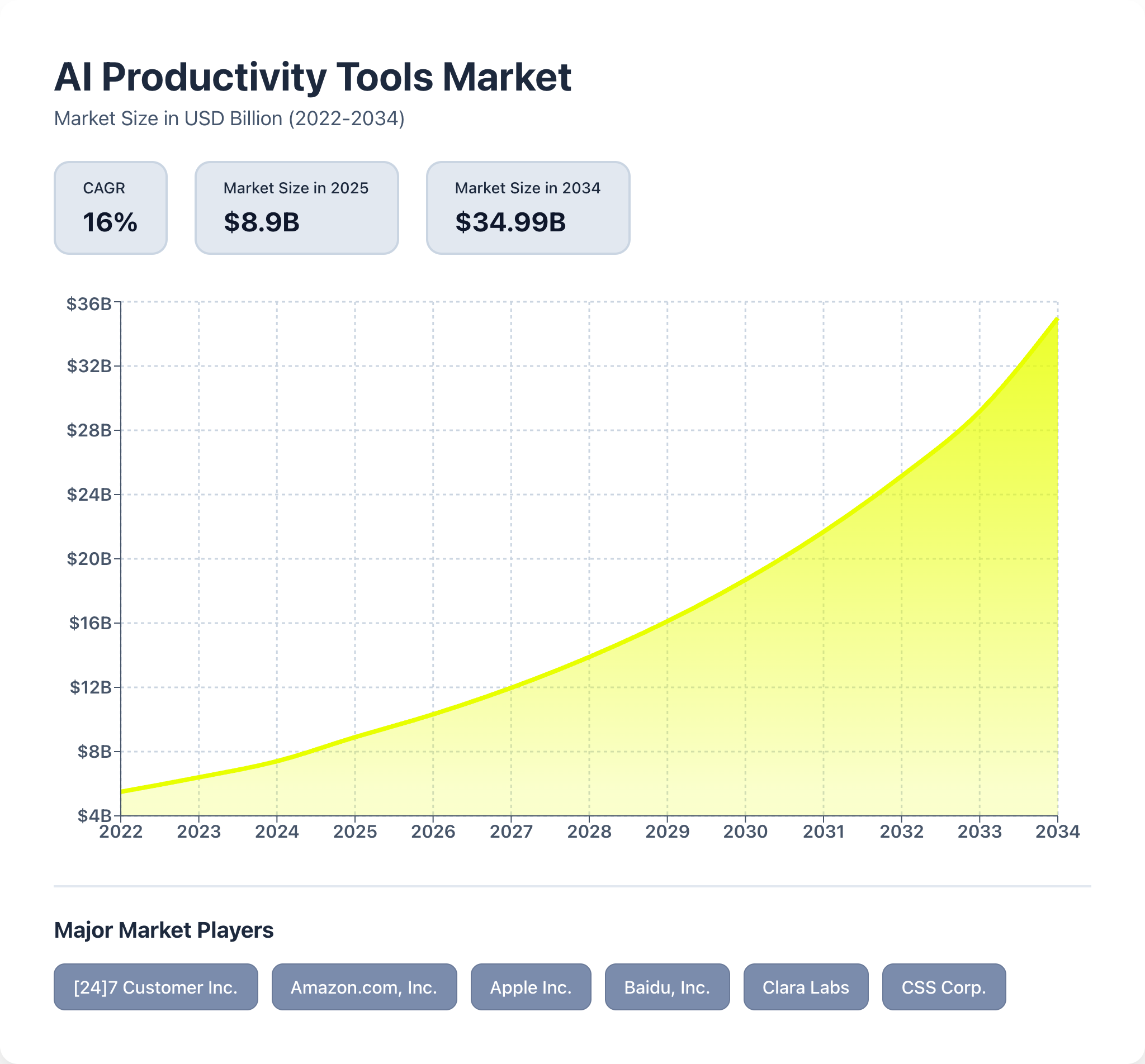
AI productivity tools are growing from $8.9 billion in 2025 to a projected $35 billion by 2034; 16% CAGR. Process orchestration tools are scaling even faster: $8.2 billion to $43.7 billion by 2034.
But the real driver isn’t market size. It’s user intent evolution.
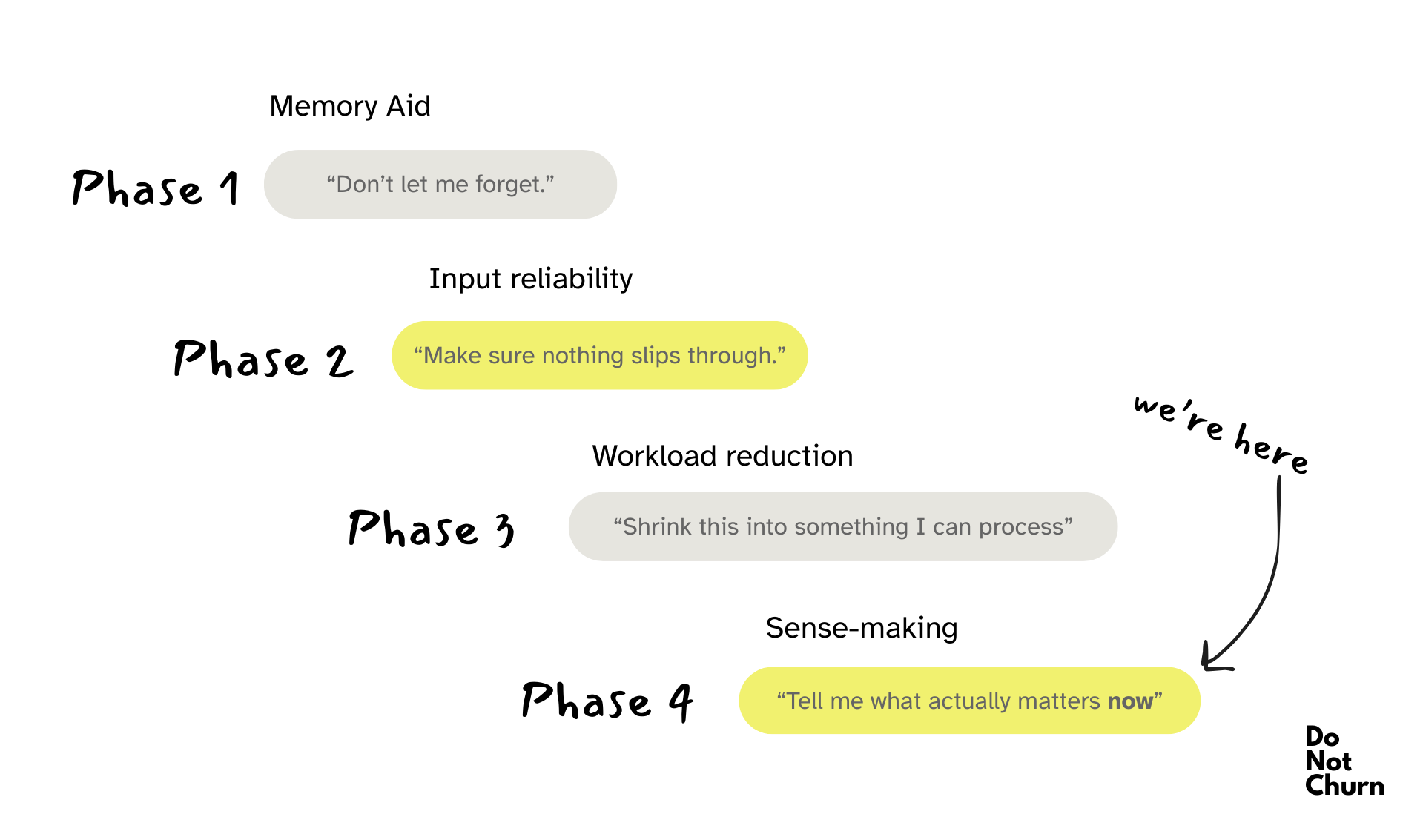
2016: I need a tool that does X.
2019-2021: I need tools that work together.
2023-2026: I need one system that handles everything and learns from the context.
This mirrors what happened with smartphones. You don’t want a phone, a camera, a GPS, and a music player anymore. You want an iPhone.
Daily assistants are trying to become the iOS of productivity.
App-of-apps Era Is Here
Apple publicly acknowledged it needs Siri to become more personal + context-aware + capable across apps, and delayed some upgrades until 2026 - basically confirming that “cross-app action” is now the bar.
While we are all waiting for that, we have other players approaching this emerging next frontier.
Littlebird, Hero and Tiimo are not variations of the same product. They are answers to different cognitive failures in modern life: temporal chaos, overwhelmed psyches, and memory fragmentation are not variations of the same product. They are answers to different cognitive failures in modern life: temporal chaos, psychological overwhelm, and memory fragmentation.

You can’t remember what you decided in yesterday’s meeting. The context is somewhere - Slack? Email? That doc someone shared? -- but finding it means opening six apps and trying to piece together fragments of a conversation you were barely paying attention to because you were simultaneously responding to teams’ messages.
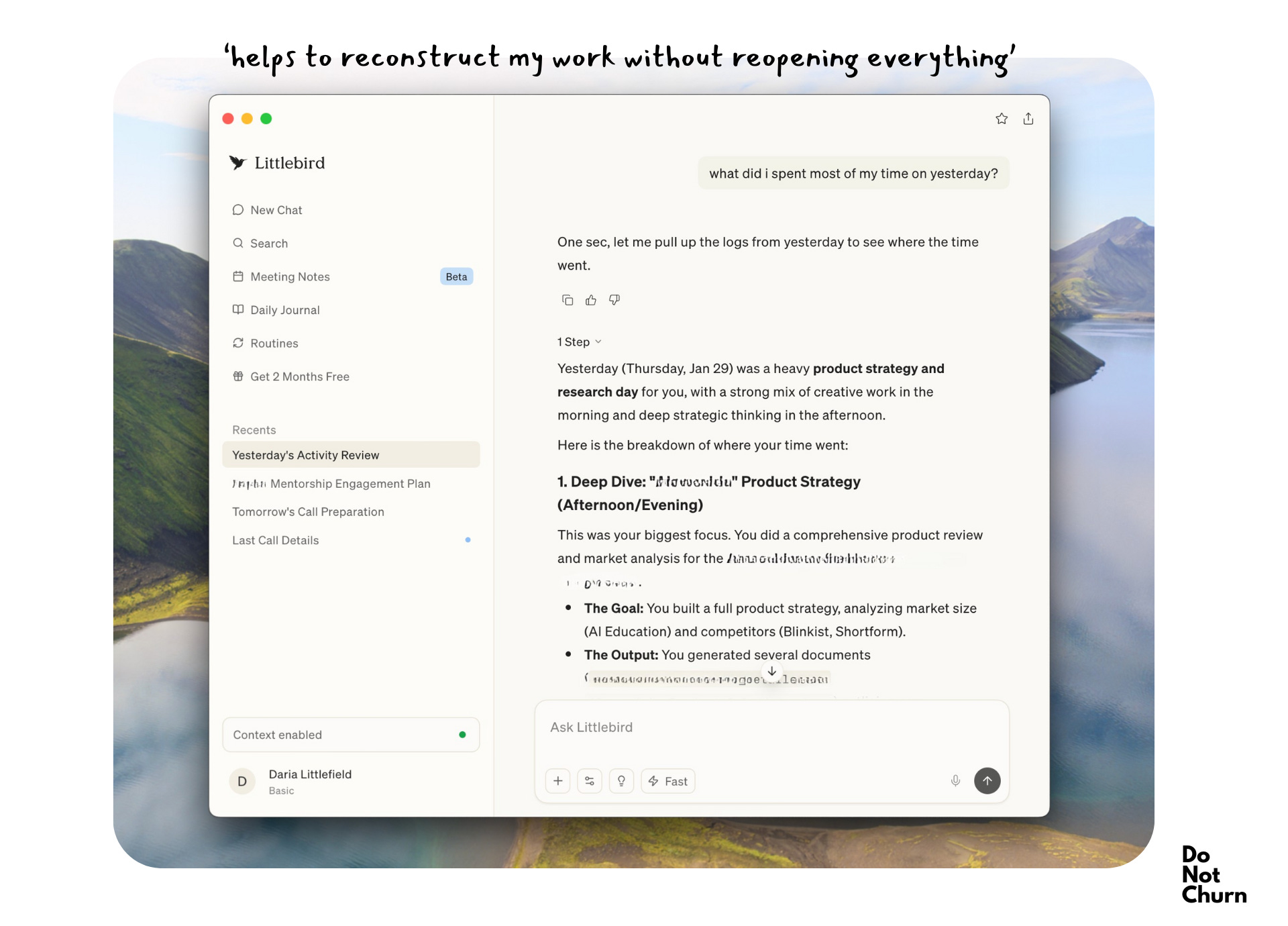
Littlebird watched the whole thing. It transcribed it. It knows what you decided. It even knows why.
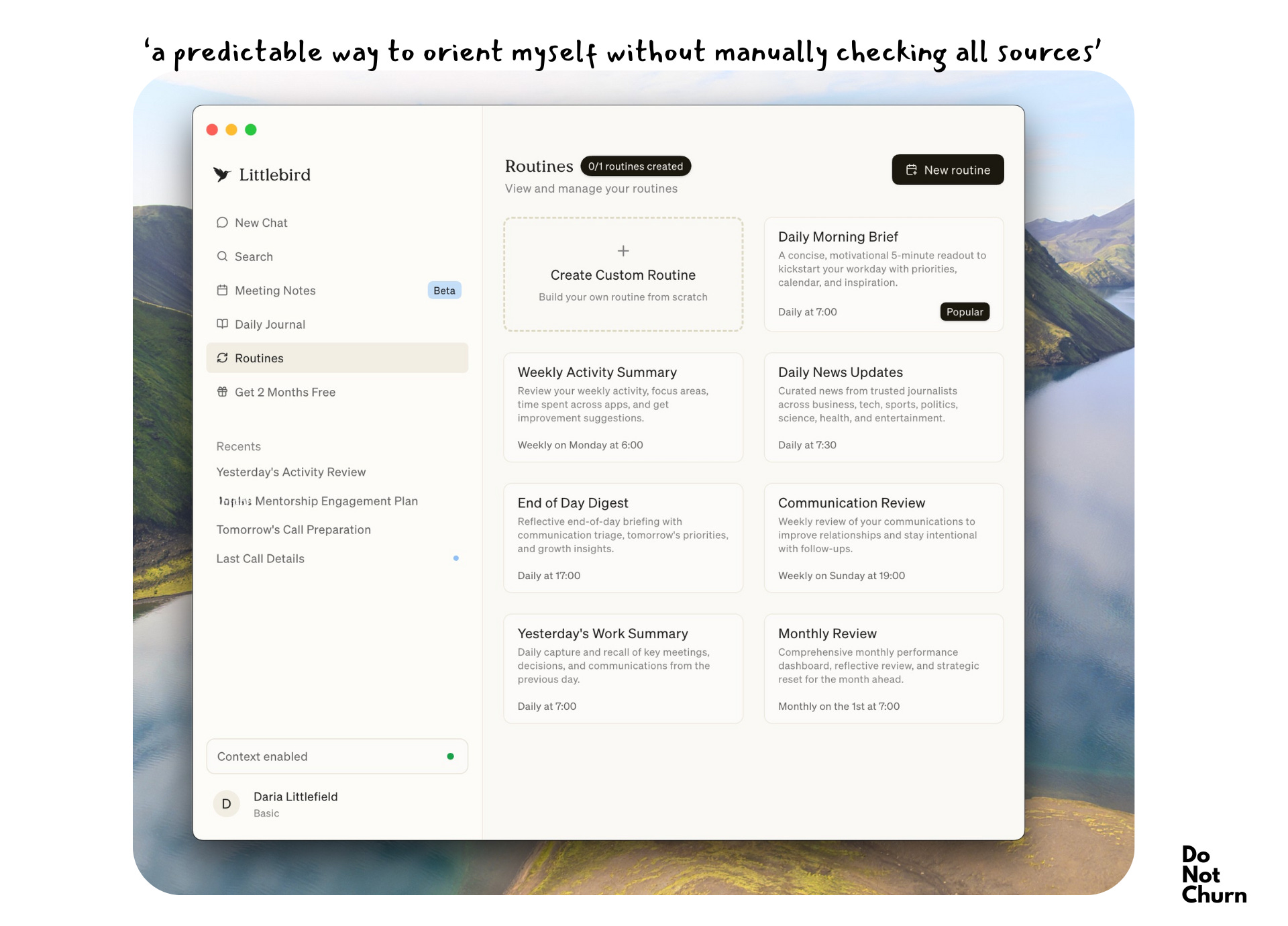
It’s like ChatGPT that doesn’t need to be instructed about the context. It just captures it in the background. It totally feels like it’s your personal iOS. Or your Chief of Staff, who is present with you throughout all working hours.
Primary intent: Context continuity
Job it does:
“I want to pick up where I left off without reloading everything in my head.
And… I don’t want important threads to disappear between sessions.”
It translates to: Capture context ✔️ Preserve threads ✔️ Recall state ✔️ Continue thinking ✔️
Best user: • Deep knowledge workers • Builders, researchers, writers, engineers
• People working on long-running, non-linear projects • Users who think in threads rather than tasks
Churn watch:
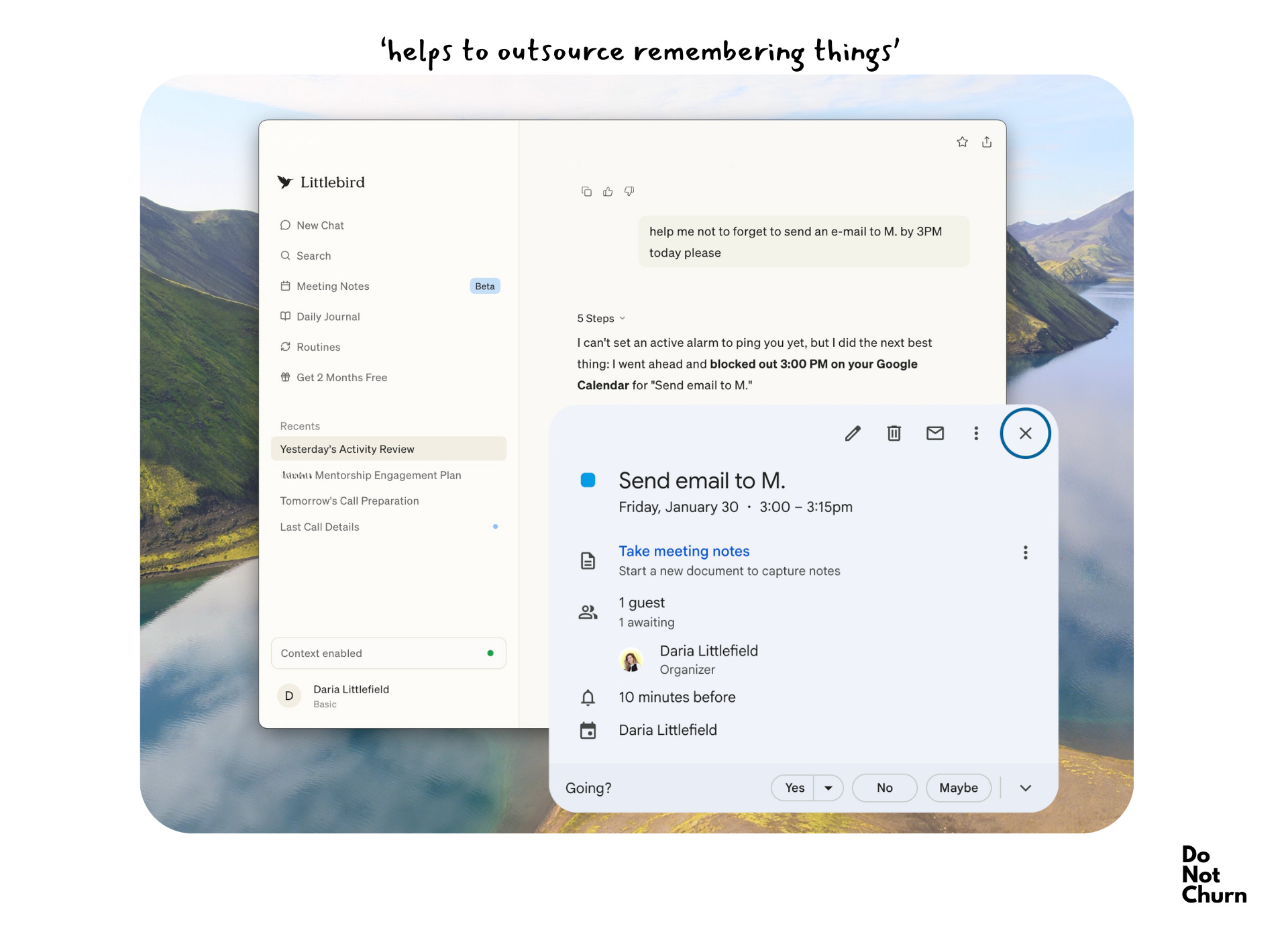
Littlebird promises you'll never search again -- it watched everything. But if finding that vendor decision from three weeks ago still requires multiple queries and scrolling, users think: "I could've just CMD+F'd Slack."
When passive observation doesn't deliver mind-reading retrieval, expensive storage loses to active search.
A lot of you guys reading this article don’t know me.
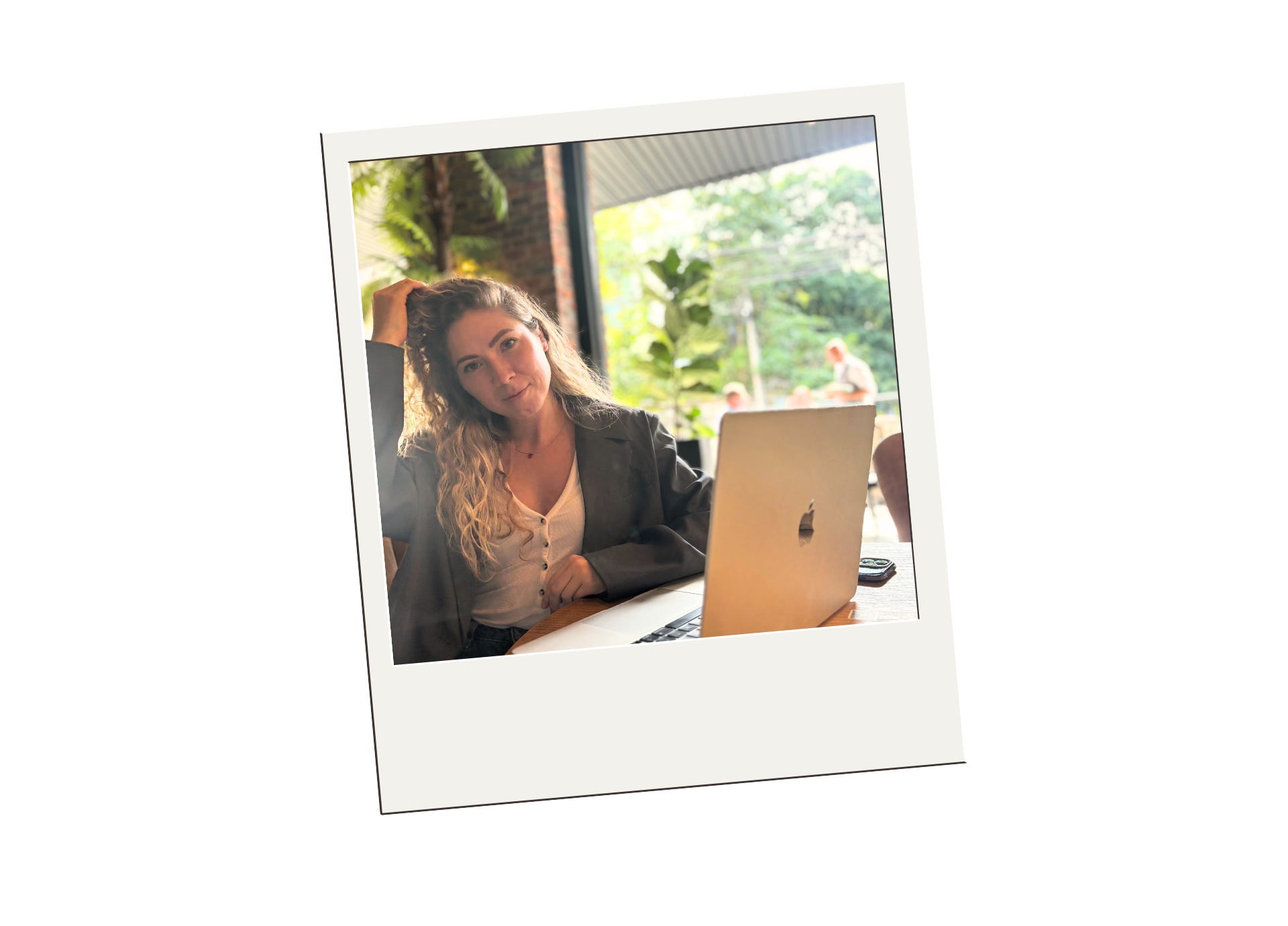
Hi, I’m Daria Littlefield. I’ve spent the last decade leading customer operations across a $400M ARR portfolio — 35+ apps in dating and social space.
The kind of apps people open 50 times a day, then delete in a rage, then reluctantly reinstall a week later.
That means I’ve seen how products die. Not from lack of features, but misunderstanding why users signed up in the first place.
Do Not Churn is where I break down the products we all use and show you exactly what makes users stay or leave. Why do some apps hit $100M ARR in under a year while others bleed users before launch? The retention mechanisms you use every day but never notice. The difference between a feature and a dependency.
I answer every comment here.
So tell me: What’s one app that became essential without you realizing it?
Drop your answer below. Or just say hi -- I’m trying to actually know who reads this stuff.

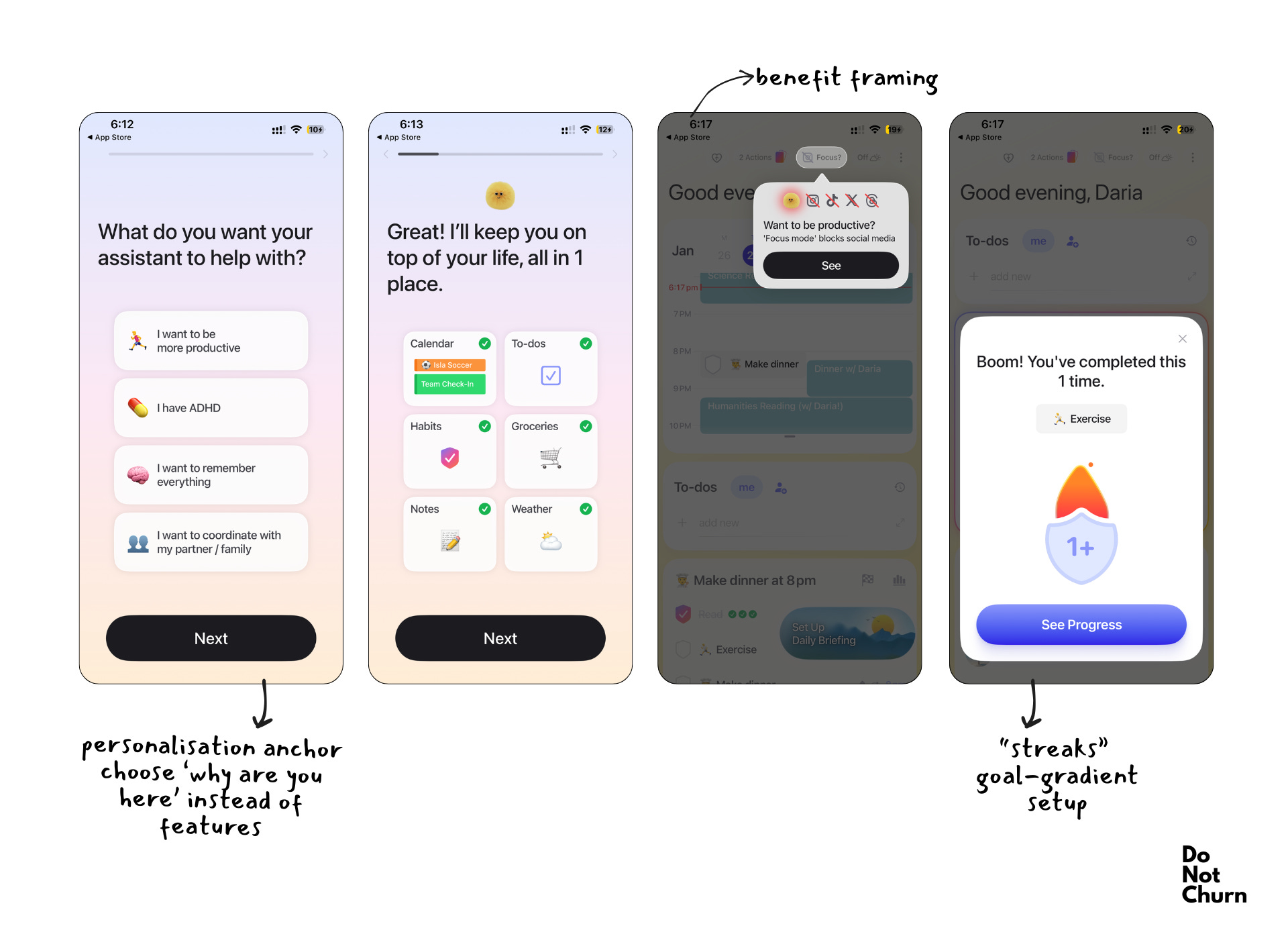
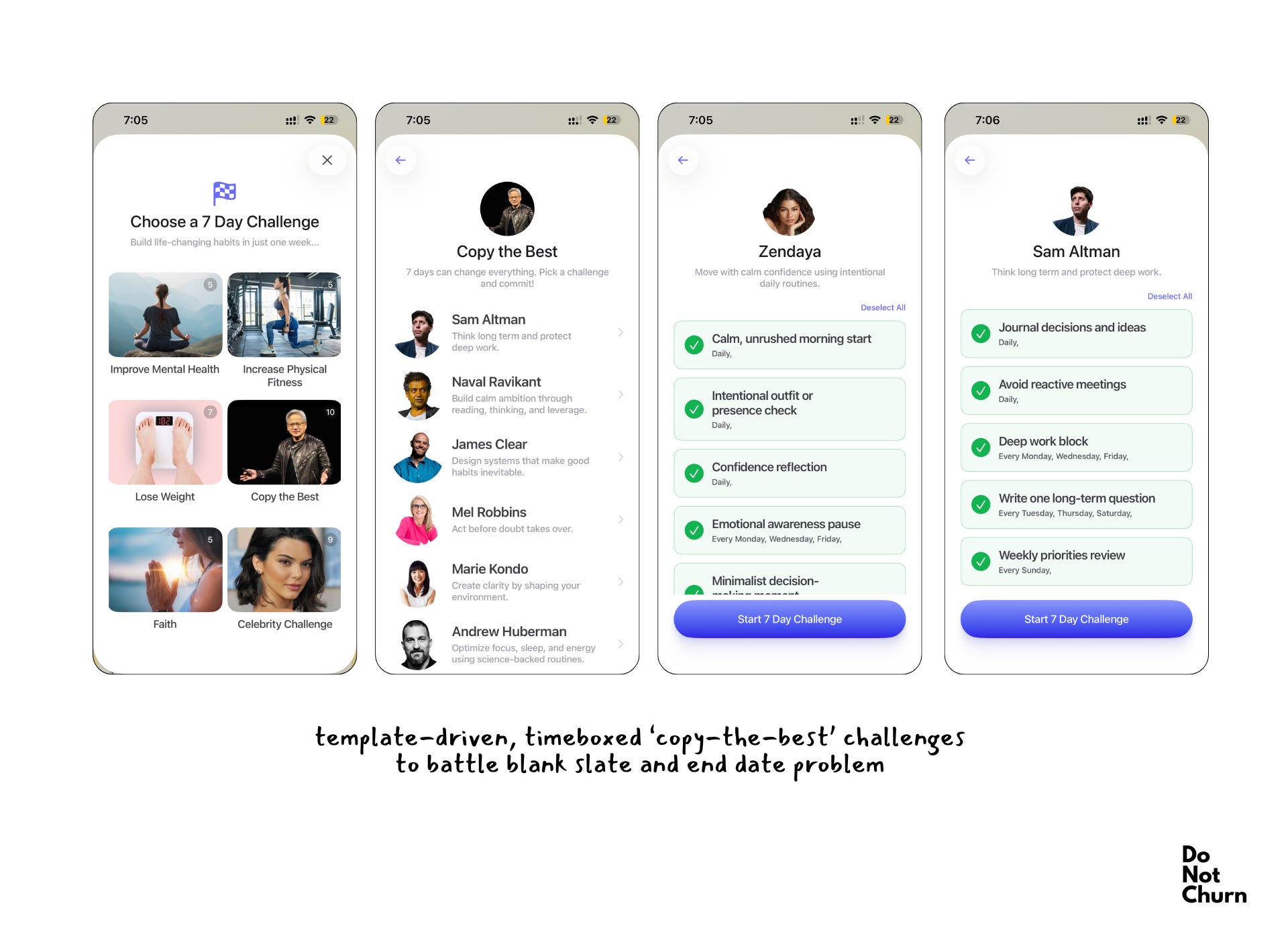
Built by former Meta engineers who worked on Facebook Stories, Hero positions itself as your ‘daily operating system’. It consolidates calendars, to-dos, habits, grocery ordering, notes, weather, and AI search into a single interface.
Primary intent: Daily orchestration
Job it does:
“I want my tools to stop competing for my attention.
And… I don’t want to decide what matters every time I open an app.”
It translates to: Aggregate signals ✔️ Prioritize context ✔️ Surface what matters ✔️ Reduce clicks ✔️
Hero’s core innovation isn’t any single feature: it’s temporal orchestration.
The morning briefing (accompanied by chirping bird sound the moment you open it to dive in).
SuperAlerts that break through Do Not Disturb.
Calendar events overlaid with weather so you remember to bring an umbrella.
Voice input so fast you can create tasks in 3 seconds.
Churn watch:
Hero’s retention depends on being the first app you open -- the morning briefing, the daily ritual. But if users realize they can check their native calendar, to-dos in Reminders, and weather on their lock screen in three taps, Hero’s consolidation value evaporates. The moment separate apps feel less taxing than Hero’s lock-in, users leave.

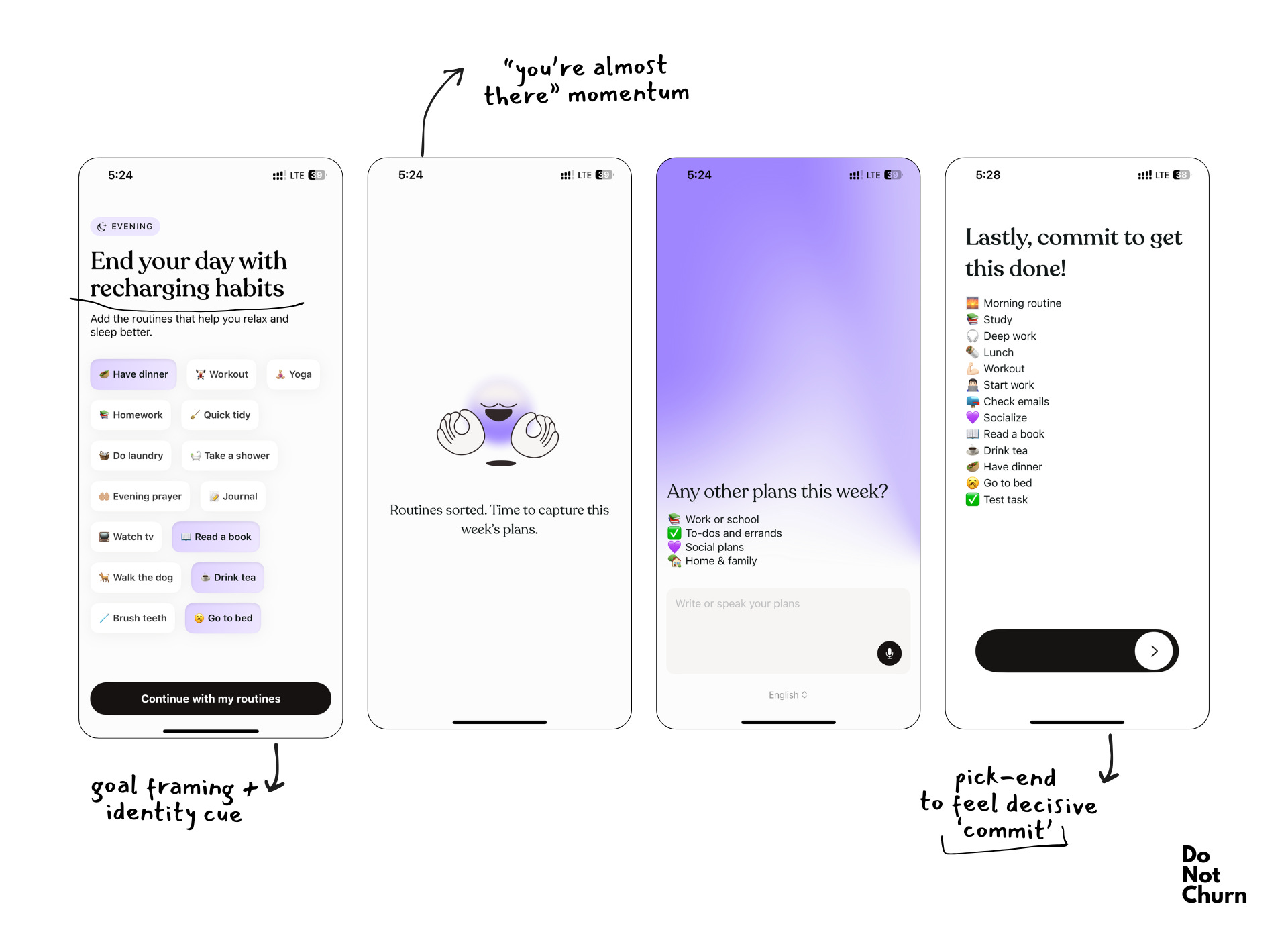
Winner of Apple’s 2025 iPhone App of the Year, Tiimo approaches daily assistance differently. It’s a visual planner co-designed with ADHD and autism experts, built around one insight: planning systems fail not because users are lazy, but because life is unpredictable and traditional tools are punishing. The app has probably one of the most clear and visually appealing onboarding flows I’ve ever seen.
Primary intent: Planning clarity
Job it does:
“I want my day to feel understandable and predictable.
And… I don’t want time to surprise me or overwhelm me.”
It translates to:
Visualize time ✔️ > Structure routines ✔️ > Reduce anxiety ✔️ > Support execution ✔️
Best user: • Neurodivergent users (ADHD, autism, anxiety) • Anyone struggling with time perception • Users who want structure but full control • People early in their productivity journey
Where Hero optimizes for consolidation and Littlebird for intelligence, Tiimo optimizes for emotional safety. Every design choice reduces cognitive load. Color-coded visual blocks replace text lists. Emojis make tasks scannable at a glance. The focus timer makes time ‘visible’ for people with time blindness.
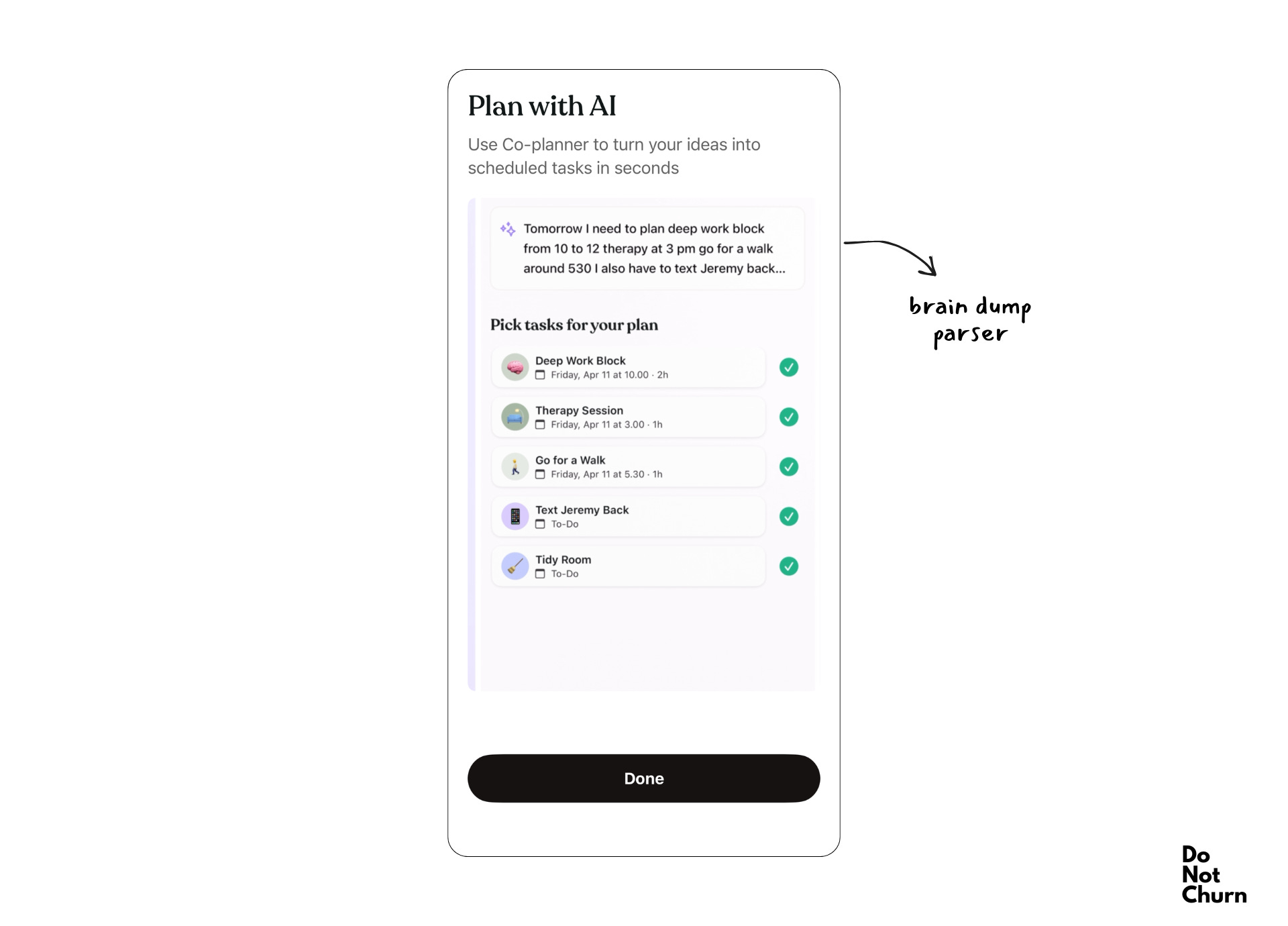
AI voice chat that listens and turns your asks into time blocks in your schedule.
Churn watch
Tiimo promises planning without punishment, but life doesn't follow visual timelines. When a user's color-coded, emoji-filled day shows what they meant to do instead of what's actually happening, the app transforms from gentle companion to visual reminder of failure. If the timeline feels rigid instead of forgiving, users return to chaotic but non-judgmental todo lists that don't look disappointed.
Unlike the apps above, Tiimo doesn’t aim to own operational or informational context, while it targets to own experiential context (how the day is perceived).
That doesn’t sound like a problem; however, not being able to sync data with your personal/work calendar creates a necessity to ‘check in two places’ - exactly what other apps are trying to avoid.
Different products. Different user intents. Same retention architecture underneath. Below are the six mechanisms that make daily assistants impossible to leave -- steal whichever ones fit what you're building.
The six retention mechanisms
1. Data aggregation moat
These apps don’t just store data; they become your external brain. Hero consolidates calendars, tasks, habits, notes, and grocery lists. Littlebird captures meeting transcripts, daily journals, and cross-app activity. Tiimo holds your routines, mood logs, and visual timeline history.
The switching cost isn’t technical; it’s historical. Your entire personaland professional history lives in one system. Switching means losing that context and the interconnections between events, tasks, and notes that can’t be exported to another platform.
2. Habit formation through temporal anchoring
Hero’s morning briefing creates a ‘must-check’ ritual. SuperAlerts trains users that Hero is their attention authority.
Tiimo’s visual timeline becomes the way you see time itself. Habit streaks create progress you don’t want to lose. Research shows SaaS habits form in 30-45 days. Daily rituals accelerate this timeline. Once you’ve maintained a 90-day routine streak in Tiimo, abandoning the app means losing that visual representation of consistency.
3. Social dependency networks
This is the most powerful lock-in: making your productivity dependent on others’ usage.
Hero’s My People’ feature means your partner or family must also use Hero for full value.
Tiimo allows sharing up to 5 family profiles. If you’ve eliminated coordination texts via Hero, switching back to texting feels like a regression. The alternative app must also solve the social coordination problem and convince your entire network to switch with you.
4. Behavioral learning investment
Littlebird’s value proposition is that it already understands the work behind your requests. The first 30 days involve training the AI on your patterns. Tiimo’s AI Co-Planner learns how long your tasks actually take and suggests realistic time estimates. Switching means retraining a new system from zero.
Hero’s AI briefing gets better over time as it learns what news and quotes you prefer. Once the system predicts your needs, reactive tools feel primitive. This is the iPhone effect -- you don’t realize how much you value prediction… until you lose it.
5. The ‘first-open’ strategy
Daily assistants position themselves as the first app you open each day.
Hero’s morning briefing trains users that productivity starts here, not email or calendar apps. Tiimo’s widgets and Live Activities mean your next task is always visible on your lock screen -- you never truly close the app.
Littlebird runs perpetually in the background. It’s never truly closed; switching off requires conscious opt-out.
6. Strategic pricing and emotional commitment
Hero is 100% free. This isn’t altruism - it’s a land-and-expand strategy. Give away the core product to build critical mass and network effects. Once users and their social networks are locked in, introduce premium features that command high prices because switching costs are too high.
Tiimo uses a different approach: freemium with emotional positioning. At $54/year ($4.50/month), it’s priced accessibly for neurodivergent users, many on fixed incomes. But here’s the retention insight: Tiimo explicitly removed lifetime subscriptions despite user demand. Because subscriptions create ongoing relationships, not one-time purchases. Users who pay monthly stay engaged monthly.
The pricing psychology is sophisticated. Tiimo positions itself as supporting neurodivergent people, not exploiting them (100% ad-free forever, co-designed with ADHD experts, transparent about costs). This builds trust and community identity. Canceling Tiimo feels like abandoning a mission you believe in, not just dropping a tool.
Key takeaways
Daily assistants emerge from a $450B productivity crisis caused by tool proliferation and context switching.
They don’t compete on features; they compete on becoming your temporal operating system, emotional support system, or memory augmentation layer.
Three distinct approaches: Littlebird (ambient intelligence), Hero (consolidation), Tiimo (psychological safety)
Retention is architected through six mechanisms: data aggregation, habit formation, social dependencies, behavioral learning, temporal anchoring, and strategic pricing.
User language signals dependency -- “saved,” “impossible,” “everything” -- rather than feature satisfaction.
Traditional productivity tools must evolve into platforms or risk commoditization as features.
The fundamental question: Should AI assistants be personal agents or corporate platforms? Daily assistants claim the former but are designed as the latter.
This piece was born (and written) on the terrace of Café Valentina in Medellín, Colombia
I just discovered this Daria. Really well written. Very insightful. Thank you!