

Building a product used to be the hard part. It isn’t anymore.
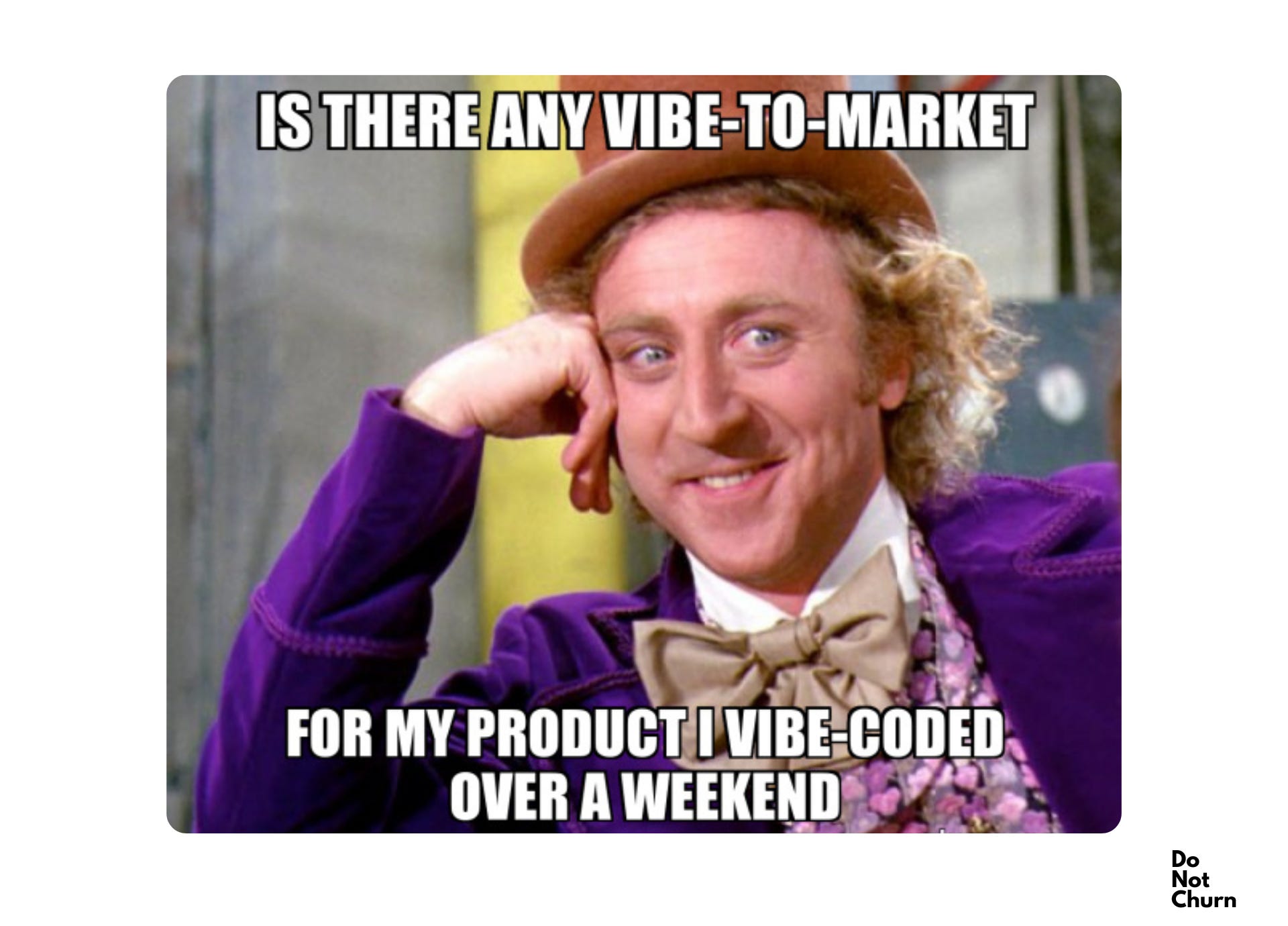
Lovable, Bolt, Replit (you name it) and a weekend and a clear idea is now sufficient to ship something real. Which means the internet is being flooded with products: hundreds per day, each one reasonably well-built. Each one looking for users, each one trying to be found in the same saturated channels, by the same finite number of people who have the same finite amount of attention.
Now, AI is being asked to solve the problem it created. Agents that audit your site, track your brand inside ChatGPT, write your social posts, queue your outreach -- all running autonomously, all promising to replace the marketing team you never hired.
The pitch is compelling: outsource the entire distribution function to a fleet of agents and get back to building.
The honest version of that pitch has a question buried inside it. Whether handing your distribution to an AI agent actually works -- not in the demo, but on the morning when the output lands in your inbox and you have to decide whether to trust it -- is what this article is really about.
About this newsletter
I’m Daria Littlefield. I spent a decade running customer operations across 35+ dating and social apps - the kind people delete in a rage and reinstall a week later. That taught me more about why products lose users than any framework ever could.
Do Not Churn is where I put that to use. Every week I break down the retention mechanics behind the products we all use - what keeps people, what loses them, and why the difference is rarely what you’d expect.
If that’s useful to you, subscribe below. If you have a take on whether AI can actually replace a marketing team - drop it in the comments.
In the early 2010s, distribution was the unsexy part of building a company. You had a product, you needed users, and the path between those two things was entirely manual. You had to cold-emailed journalists, post in niche forums.
If you had a budget, you ran Facebook ads and A/B tested subject lines.
If you didn’t, you did the same things with less coffee and more desperation.
Then growth hacking became a discipline. Sean Ellis coined the term in 2010. Airbnb reverse-engineered Craigslist. Dropbox built a referral loop.
What these companies understood -- and what most founders missed -- was that distribution wasn’t a single campaign, it was a carefully designed system - designed it once, it ran continuously, and it compounded. The founders who grasped this scaled fast. The ones who kept treating distribution as a one-time effort to revisit quarterly - didn’t.
The problem was that building a distribution system still required a team - a growth engineer, a content strategist, and an SEO specialist, also someone to run LinkedIn, someone to manage outreach sequences.
Most early-stage companies couldn’t afford all five and tried to split those jobs across two founders who were already running out of hours.
AI was supposed to fix that: automate the execution. Let a solo founder punch above their weight. And the tools that arrived between 2023 and 2025 mostly delivered on the automation half of that promise. Scheduling, drafting, sequencing -- all reduced to minutes.
The real shift happened with the collapse of the building barrier.
For years, distribution was hard because building was also hard. The two problems competed for founder attention, and most early-stage teams made a rational choice: ship first, figure out growth later. In reality, it reflects something more structural now: building is no longer the bottleneck. It hasn’t been for about eighteen months.
Lovable, Replit, Bolt, Cursor -- the vibe-coding era didn’t just lower the cost of building a product. It removed the floor entirely. A weekend and a clear idea are now sufficient to ship something real: what used to take a three-person engineering team three months now takes one person with a few good prompts and a free Sunday afternoon.
The consequence nobody fully anticipated: the internet is now being flooded with products: hundreds per day, thousands per week. Each one is reasonably well-built, functionally indistinguishable from the next at the feature level, and competing for the same finite amount of human attention.
Distribution became harder as the supply side exploded while the demand side stayed flat. More products are looking for users than there have ever been, and the channels that used to carry them -- Google search, Product Hunt, Hacker News, X virality -- are saturated in a way they weren’t three years ago.
Okara, Typefully, and Castmagic are not, fundamentally, marketing tools -- they are the first wave of infrastructure responding to a structural imbalance: the gap between how fast products can now be built and how fast they can actually be found.
AI distribution replaced scheduling, then sequencing, and now it’s racing to keep pace with a building wave that never stops shipping

Okara is positioned for what I’d call ambient organic authority building -- and it launched on March 16, 2026.
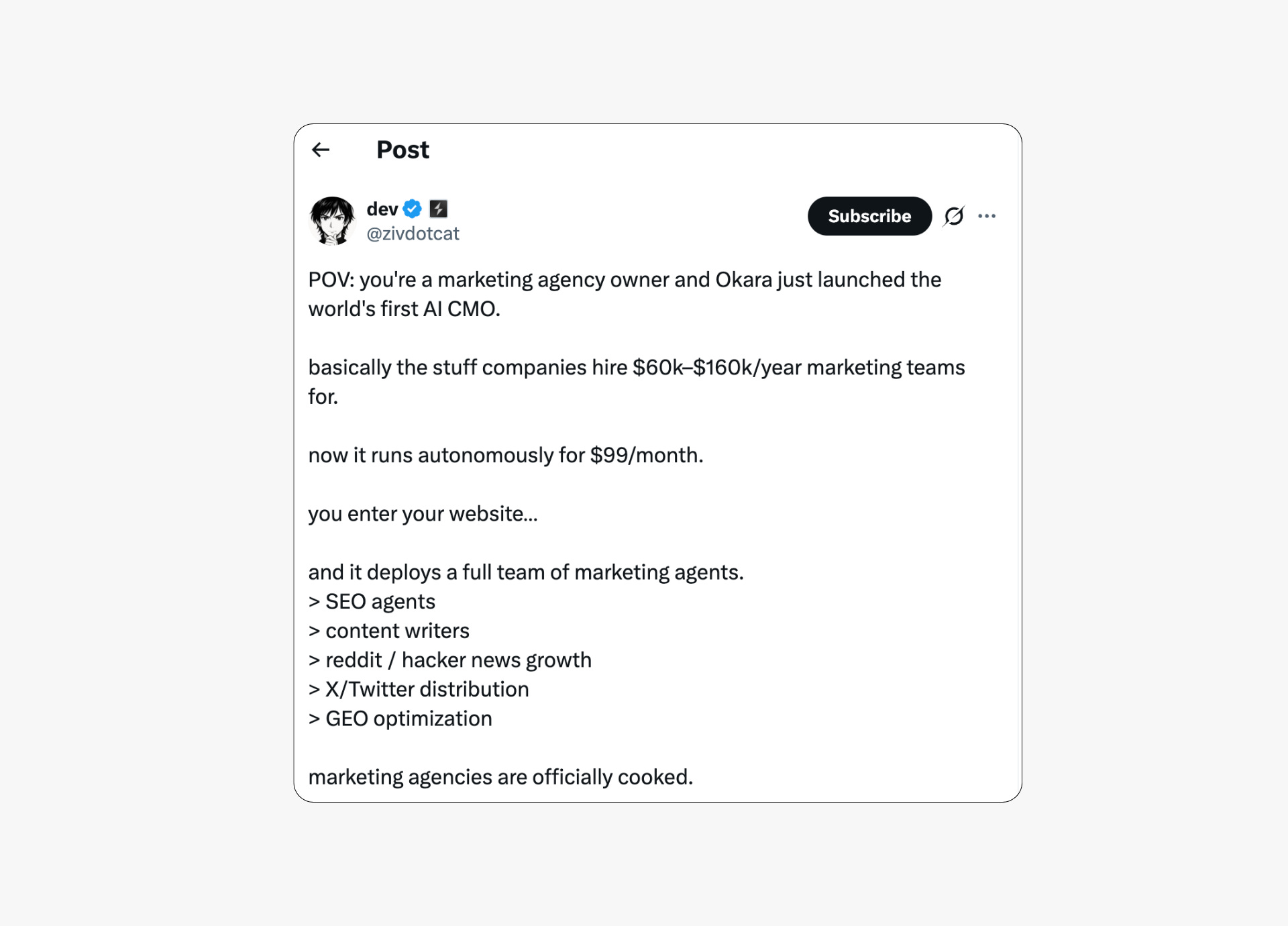
The company was founded in 2025 by Fatima Rizwan, a founder based in Singapore running a globally distributed team spread across India and Malaysia. Rizwan built Okara first as a privacy-first AI chat platform -- encrypted conversations, 20+ open-source models, no data training -- before pivoting the product surface toward autonomous marketing. That background matters. She didn’t come from growth or SEO. She came from a conviction that professionals needed powerful AI tools they could actually trust with sensitive information. The AI CMO is that thesis applied to distribution: an agent that works on your behalf, on infrastructure you don’t have to second-guess.
Primary intent: Organic visibility
Job it does:
“I want traffic and users to find me without spending my entire week on SEO. And… I don’t want an agency sending me a monthly PDF of vague recommendations I can never act on.”
It translates to:
✔️ Submit URL
✔️ Agents audit site and brand presence daily
✔️ Specific fixes land in your inbox each morning
✔️ GEO Score tracks visibility inside ChatGPT, Claude, Perplexity
✔️ Social and community agents distribute content autonomously
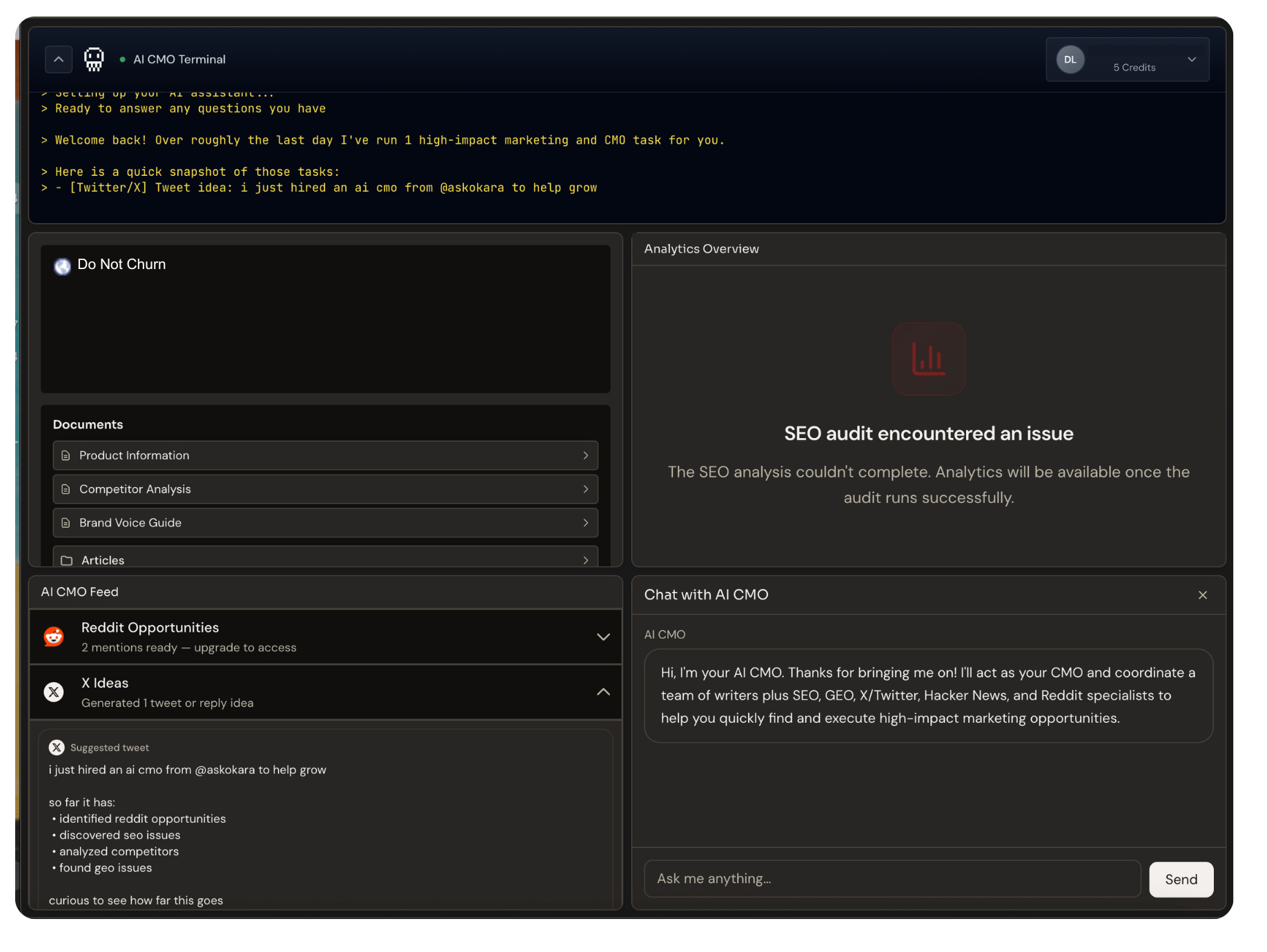
The GEO Score is the one genuinely novel idea here. As AI-powered search handles a growing share of discovery queries, appearing inside LLM-generated answers is becoming as important as a Google ranking. Okara is the first tool systematically measuring this signal.
Before you pay, the product shows you an agent working -- scanning your site, building context, loading company data. It feels like something significant is happening. What you actually get on the free tier is a business description and a list of pending tasks, all locked behind the paywall. The dopamine of watching an agent run is building up anticipation, but the output, at least publicly, is not yet commensurate with that experience.
What no one is saying loudly enough is what Okara -- and any AI CMO -- structurally cannot replace: strategy and taste. An agent can audit your site, fix your meta descriptions, and schedule your posts. It cannot tell you whether your positioning is wrong, whether you’re talking to the right audience, or whether the angle of your content is interesting enough for anyone to care. Those decisions don’t live in a prompt. They live in a founder’s judgment about their market, their product, and what makes their thing worth finding in the first place. The tools that survive long-term will be the ones that amplify good taste -- not the ones that promise to substitute for it.
Optimised for:
• Pre-revenue founders with a working product but no marketing function
• Bootstrapped solo operators who can’t justify $3k/month tools
• Indie builders post-launch, trying to get first organic traction
• Early-stage SaaS teams that need daily momentum without daily effort
Churn watch: Okara’s churn window is days 30–60. SEO and GEO are lagging signals -- you won’t see traffic movement in the first month, regardless of what the agents do. If the daily inbox briefs feel generic or the GEO Score doesn’t show directional improvement within six weeks, founders will cancel before the system has had time to work. The bigger risk is the paywall architecture: when the most impressive part of the experience is the loading animation and the most valuable outputs are locked, users who haven’t converted will never know if they missed something real or just a more polished version of what they already have.

Typefully is optimized for what I’d call social presence compounding -- and unlike the other two tools in this analysis, it has the receipts to prove it works.
The product was born in June 2020 as a weekend side project by Fabrizio Rinaldi, a designer, and Francesco Di Lorenzo, an engineer -- two Italians who met on Twitter in 2011 and had previously built and sold Mailbrew, an email digest tool. They made Typefully to scratch their own itch: the official Twitter thread experience was, in their words, simply broken. The side project kept growing. By 2022, Evan Williams -- one of Twitter’s original co-founders -- came on as an angel investor. Today it’s used by 220,000+ creators, bootstrapped, no VC, based in Portugal. Founders report growing X followings by 5,000+ in six months. Users who barely posted on LinkedIn started posting consistently the week they signed up.
Primary intent: Social reach
Job it does:
“I want to show up consistently on X and LinkedIn without managing two separate tools, losing drafts to platform bugs, or spending my evenings manually adding calls-to-action under posts that happened to go viral. And I don’t want to think about which platform to post to -- I just want to write once and be everywhere.”
It translates to:
✔️ Write once in distraction-free editor
✔️ Cross-post simultaneously to X, LinkedIn, Bluesky, Threads
✔️ AI rewrites and optimises per platform
✔️ Schedule at AI-recommended best time
✔️ Auto-Plug fires a CTA automatically when post crosses your engagement threshold
✔️ Analytics show what landed, by platform and post type
The Auto-Plug feature is structurally underrated. When a post crosses a founder-defined engagement threshold -- say, 200 likes --Typefully automatically adds a promotional reply without the founder needing to monitor their feed. In a world where viral moments are unpredictable and short-lived, this converts attention into action at the exact moment it’s most abundant. It’s not automation for the sake of it. It’s distribution timing solved.
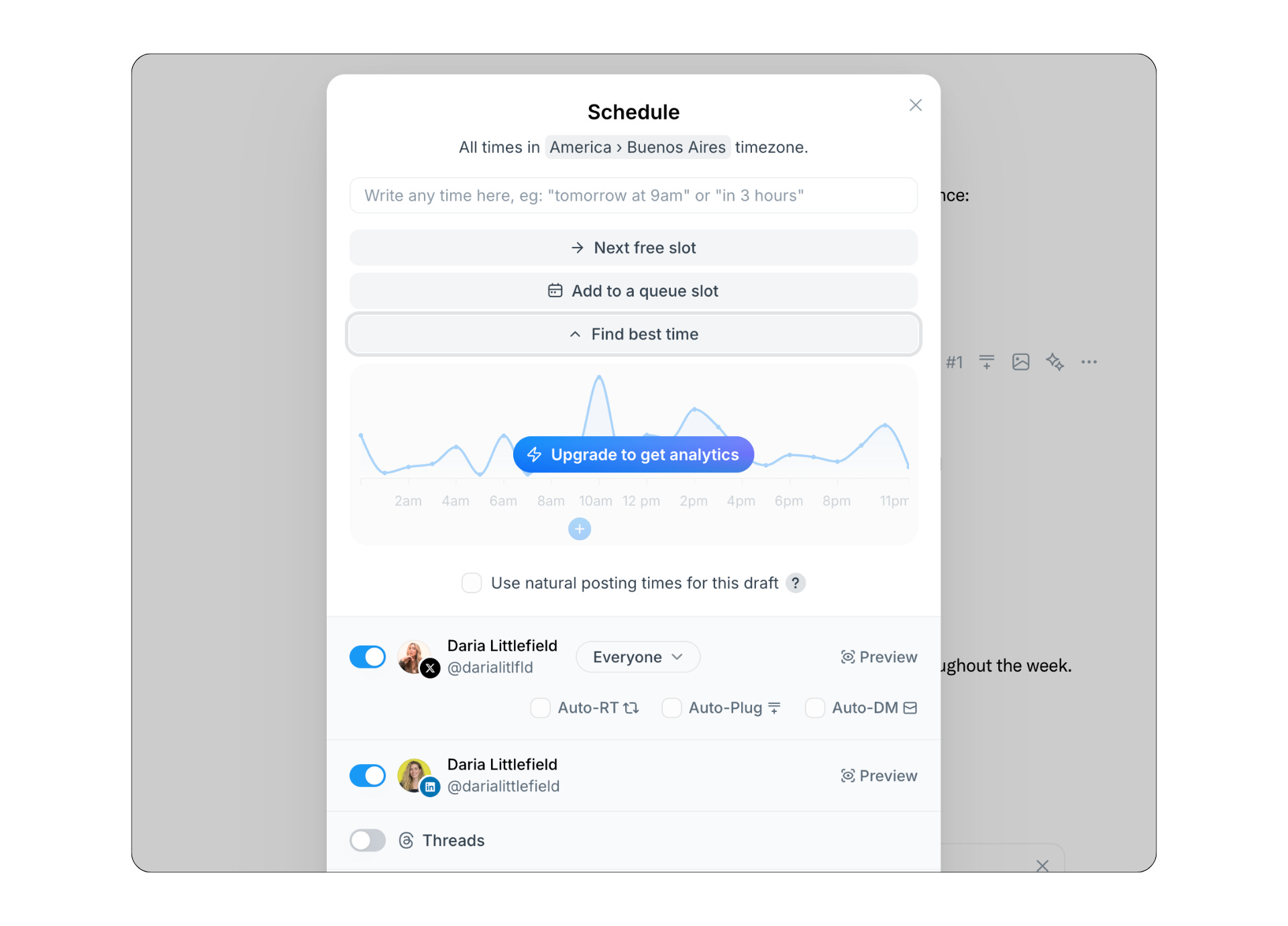
What Typefully gets right is the friction removal. X’s native editor loses drafts. LinkedIn’s interface punishes frequent posters. Typefully gives both channels a single, clean writing surface -- Notion-like, auto-saving, with real-time pixel-perfect previews of how the post will actually render. Users don’t post more because Typefully tells them to. They post more because the experience of posting has finally stopped being painful.
Optimized for:
• Founders building personal brands alongside their products
• Creators who live on X and want LinkedIn reach without LinkedIn effort
• Solo operators whose distribution strategy is their own voice and following
• Small teams where the founder is the marketing department
Churn watch: Typefully’s churn is a posting consistency problem, not a product problem. The tool delivers exactly what it promises -- but only when the user keeps showing up to write. Founders who post fewer than three times a week see marginal follower growth, open their analytics dashboard, feel disappointed, and quietly downgrade to the free tier.
The streak feature -- a GitHub-style contribution graph for posting frequency -- is the right counter-lever. It makes consistency visible and psychologically costly to break. The metric to watch is weekly active posts per user: below three, retention risk climbs sharply. Above five, users almost never leave.

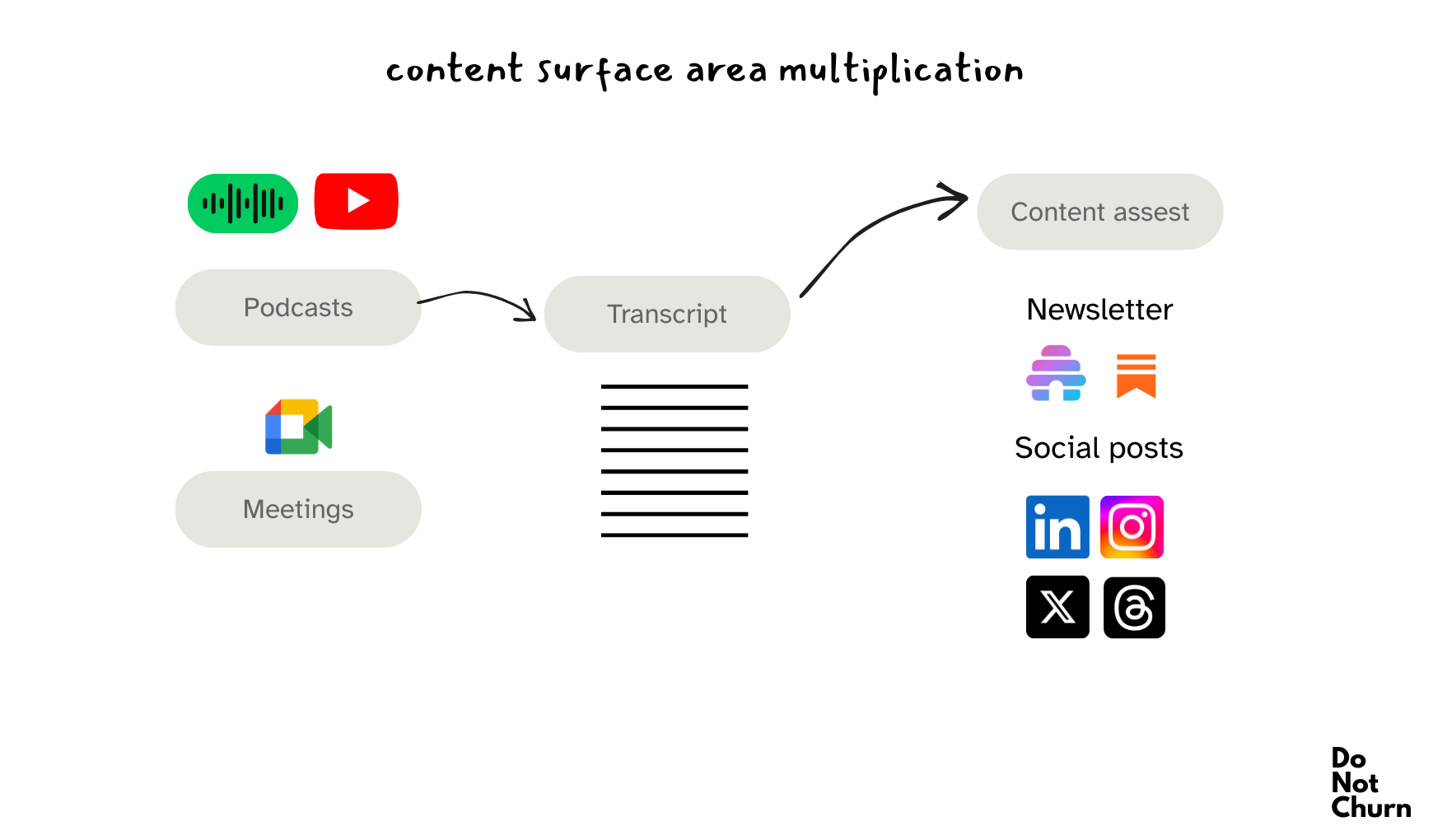
Castmagic is optimized for what I’d call content surface area multiplication -- and it’s the most validated product in this group by a significant margin. 75,000+ users. 10 million+ minutes processed. It has the receipts.
The company was founded in Miami by Blaine Bolus and Ramon Berrios, who were already running DTC Pod -- a podcast for founders in the commerce and creator space -- when they realised that producing the show was taking more time than recording it. They enlisted engineer Justin Tormey and built Castmagic to solve their own problem. Bolus is a serial founder: before Castmagic he co-founded Seated (backed by Greycroft, Craft Ventures, and Insight Partners) and OmniPanel (backed by CRV). He bootstrapped Castmagic from zero to $2M ARR in under a year.
That trajectory -- a podcaster building a tool for podcasters, then watching it expand into agencies, coaches, and enterprise teams -- is exactly the kind of founder-product fit that makes the churn mechanics worth studying.
Primary intent: Content amplification
Job it does:
“I want every podcast, client call, and recording I make to turn into a week of published content across every channel. And I don’t want to spend six hours reformatting the same ideas for LinkedIn, the newsletter, and the blog.”
It translates to:
✔️ Upload recording or pipe from RSS/Zoom/YouTube
✔️ AI transcribes with speaker ID and filler word removal
✔️ Blog post, show notes, social posts, newsletter, video clips generated simultaneously
✔️ Magic Chat lets you query the recording as a document
✔️ Content exported or auto-scheduled
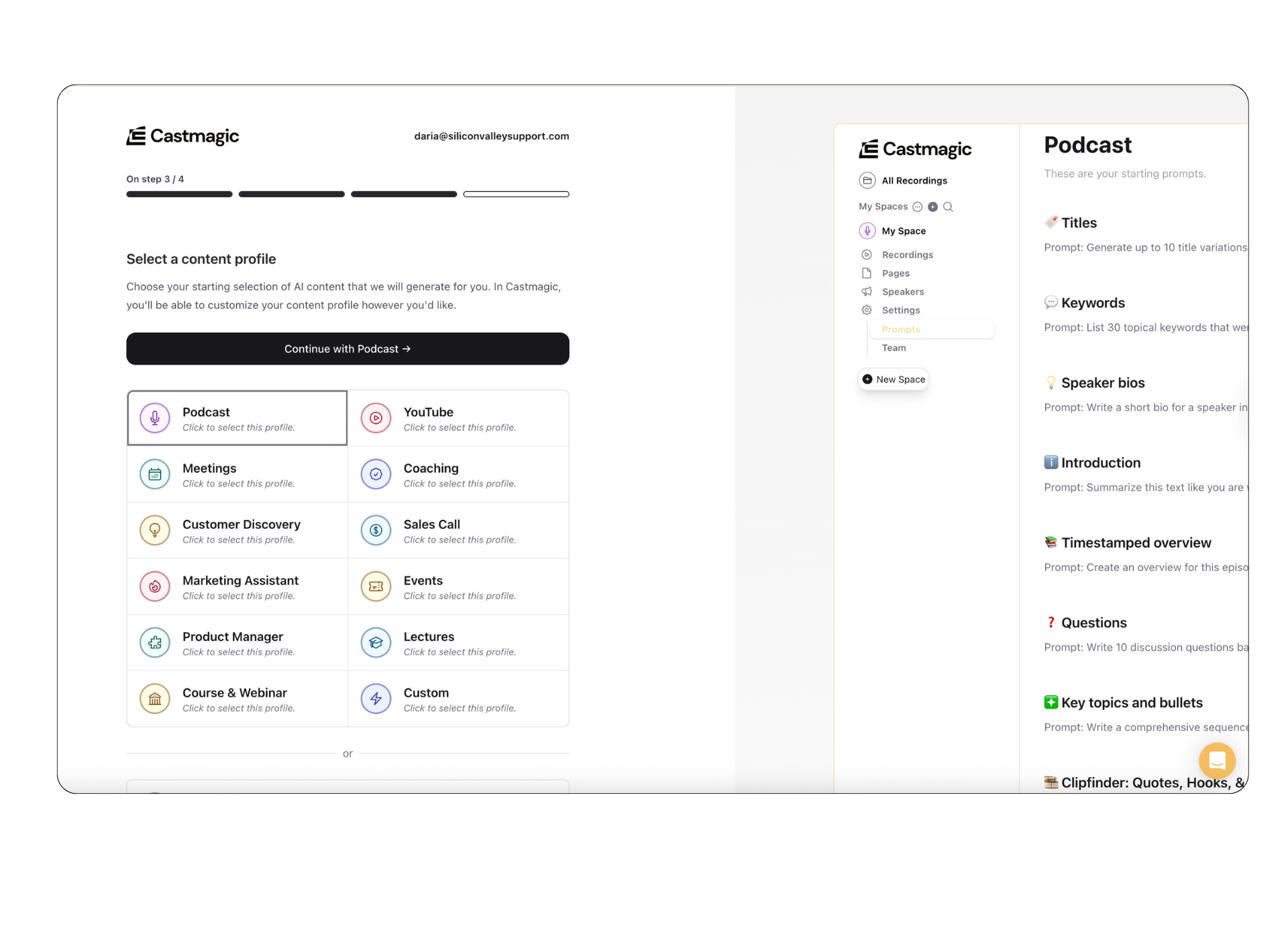
What Castmagic gets right is the ratio. One hour of audio becomes eight to twelve publish-ready assets in minutes. That’s not just a productivity improvement -- it’s a distribution model change. The content already exists. Castmagic multiplies the number of places it can be found. In a world flooded with vibe-coded products competing for the same attention, showing up consistently across every channel is no longer a nice-to-have - it’s the baseline.
Best users:
• Podcasters and video creators publishing regularly
• Marketing agencies managing multiple client content programmes
• Coaches and consultants converting session recordings into distributable IP
• Revenue teams are turning sales calls into objection libraries and case studies
Churn watch: Castmagic’s churn is a consistency problem, not a quality problem. Users who process their first five episodes are genuinely delighted. The risk emerges when the library grows past 20 or 30 recordings and navigation becomes cognitively expensive. If past content doesn’t resurface semantically — if users can’t search across episodes, connect recurring themes, or see what performed — the library becomes a graveyard. Assets accumulate but value doesn’t compound visibly.
The 6 retention mechanisms
1. Proof before paywall (the Okara problem) The most dangerous conversion architecture in AI distribution tools is one where the most impressive moment -- the agent working, the progress bar moving -- happens before the user has paid, and the actual output is locked behind the subscription. This creates a trust inversion: the product earns maximum engagement at zero revenue, then asks for commitment before delivering proof of value. Tools that show a real output sample before asking for payment will outperform those that use the working animation as the conversion mechanism.
Why it prevents churn: Users who converted on real output evidence cancel less than users who converted on aesthetic anticipation.
2. Streak mechanics as posting infrastructure (Typefully) Typefully’s posting streak -- a visible chain of consecutive days with at least one published post -- is a behavioural design choice that has nothing to do with features and everything to do with retention psychology. The streak makes the cost of stopping visible. Breaking a 34-day streak feels worse than not starting one. This is the same mechanism that keeps Duolingo users coming back at 11pm to avoid losing their streak -- not because they suddenly want to learn Spanish, but because the chain has acquired its own value.
Why it prevents churn: Distribution tools that make consistency visible and costly to break retain better than those that only reward output volume.
3. Asset library gravity (Castmagic) Every recording processed adds to a searchable, queryable library. Magic Chat means users can ask “what did I say about pricing in the last three months?” and get an answer across their entire back catalogue. The library becomes a second brain. Leaving means abandoning accumulated IP.
Why it prevents churn: The depth of the library makes Castmagic harder to leave with each recording added. Switching cost is informational, not contractual.
4. Metric ownership as category lock-in (Okara’s GEO Score) If the GEO Score becomes how founders measure AI search visibility -- the way Domain Authority became the SEO proxy metric for a decade -- then Okara owns both the measurement and the optimisation simultaneously. Users don’t leave tools that define the benchmark they’re optimising for. The risk is that Okara needs to establish this metric before a better-funded competitor builds the same measurement natively.
Why it prevents churn: The metric creates attachment before the outcome does. Users stay to watch the number move even when traffic hasn’t yet confirmed the theory.
5. Speed-to-first-result as the conversion event (all three) Across every AI distribution tool, the churn that happens in days one through fourteen is almost entirely caused by the same thing: the user hasn’t seen anything real yet - a follower gained, an article was published, a score moving. Tools that engineer a visible first result within 24–48 hours of signup retain dramatically better than tools that require setup, warm-up periods, or patience. In a category built for founders who can now ship a product in a weekend, patience is not a feature.
Why it prevents churn: The brain doesn’t cancel things that have already produced something. Even a small first win reframes the tool from “experiment” to “part of the workflow.”
6. The visible cost of cancellation (all three, but sharpest in Typefully) Most SaaS tools go quiet when you cancel them. Distribution tools do the opposite -- they go loud. The day a founder stops using Typefully, their posting streak breaks and their follower growth flatlines on the analytics dashboard they can still see. The day they stop feeding Castmagic recordings, the social queue empties. The day Okara's agents stop running, the inbox goes silent and the GEO Score freezes. The absence is immediate, visible, and personal. This is structurally different from cancelling, say, a project management tool, where the cost takes weeks to feel. Distribution tools create a daily present reminder of what you had -- not just a vague sense that something useful is gone.
Why it prevents churn: Cancellation in most SaaS is passive -- you stop paying and life continues. Cancellation in distribution is active -- you watch something you built start to decay in real time. Founders who have seen their posting streak sitting at zero for three days are far more likely to resubscribe than founders who simply forgot the tool existed. The loss is visible before it becomes permanent.
KEY TAKEAWAYS
AI distribution tools are not a marketing trend -- they are infrastructure responding to a structural imbalance: building a product now takes days, but getting it found still takes months
Organic visibility tools like Okara retain users by owning a new measurement metric (GEO Score), but face a structural paywall problem: the most impressive moment happens before the value is proven
Social compounding tools like Typefully retain users through streak mechanics -- making consistency visible and costly to break turns posting from a chore into a chain nobody wants to end
Content amplification tools like Castmagic retain users through asset library gravity -- the accumulated recording library creates a switching cost that compounds with every upload
Retention follows output credibility; churn begins the moment a founder edits an AI-generated output and thinks, “I could have written this faster myself.”
So - can marketing be automated?
The execution, yes. The judgment, taste and strategy fit -- not yet -- and that gap is exactly where products go invisible.